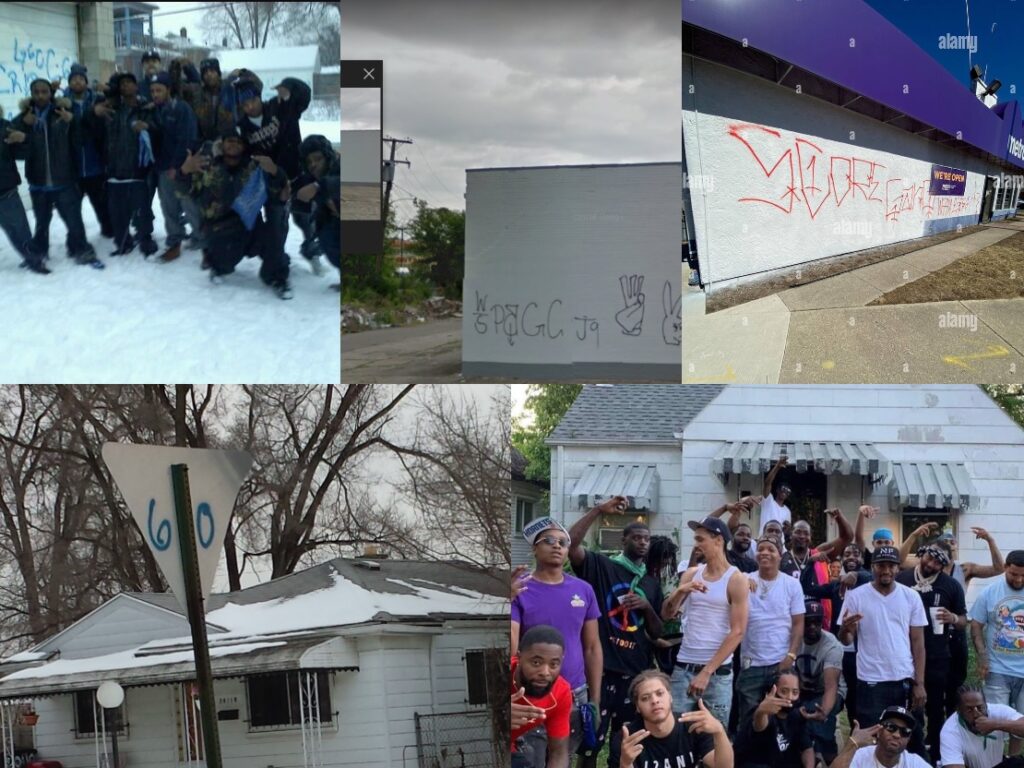
The Crips are a nationwide street gang that originated in Los Angeles in the late 1960s. Detroit has a documented presence of Crip-affiliated sets, with several street gangs active across the city’s neighborhoods. The FBI has reported their presence since at least 2006.
According to a 2018 indictment involving a gang war between the 7 Mile Rollin’ 60s Crips and the 7 Mile Playboy Gangster Crips:
“The Rollin’ 60s Crips is a national street gang founded in Los Angeles, California, in the mid-1970s. In approximately 2006, Jerome Hamilton started a Detroit set of the Rollin’ 60s, which now boasts approximately 150 members and operated primarily on the west side of Detroit in the vicinity of Seven Mile and Tracey. The Rollin’ 60s Detroit chapter is a violent organization responsible for numerous assaults, robberies, carjackings, and the unlawful possession and trafficking of firearms and narcotics in and around the Detroit metropolitan area over the last nine years. The gang uses violence as a means of retribution for acts done by rival gang members, to intimidate witnesses, and as a means for individuals to maintain or advance their position within the gang.”
There are “dozens of Crip spinoffs and cliques.” According to Captain James Stewart of the Detroit Police Department’s Organized Crime Bureau, many of these groups are involved in local “tag wars,” which law enforcement has noted can potentially escalate into violence (Detroit News, Aug. 2025). These street-level gangs maintain distinct local identities while occasionally aligning with other Crip—affiliated sets nationally. This page provides a factual overview of their history, affiliations, territories, and cultural influence in Detroit.
Crip—affiliated sets began appearing in Detroit during the late 1990s or early 2000s, influenced by West Coast affiliations and the migration of youth cultures. Early Detroit Crip—identified street gangs often adopted names and organizational structures from Los Angeles sets, while establishing local identities tied to specific neighborhoods and blocks. Over time, Crip—affiliated street gang presence expanded across the city, creating both alliances and rivalries with other street gangs.
For definitions of terminology related to activity, conduct, demographics, gang-related terms, identifiers, and classifications used on this page, refer to the site glossary.
For definitions of gang-related terms, identifiers, and classifications used on this page, refer to the site glossary.
Crip—affiliated gang members are commonly associated with the color blue, which may appear in clothing or accessories such as bandanas, shoelaces, belts, hats, sweatshirts, or other apparel. Bandanas are often worn on the left side to indicate Crip affiliation, though this practice can vary by location and set.
When clothing alone does not clearly communicate affiliation, hand signs may be used. One of the most common is the “C” hand sign, typically made with either the left or right hand and derived from adapted sign language used within Crip culture.
Within conversation, Crip—affiliated gang members and their associates are documented as referring to one another with terms such as “Cuzz” or “Cuh.” References characterized as anti-Blood language—defined as expressions directed against the “Bloods”, a nationally recognized rival street-gang network—may also appear, including abbreviations such as “B/K” (“Blood Killer”). Affiliates frequently adopt clothing or symbols associated with their specific set; for example, certain Detroit-based Crip groups, including the Shotgun Crips, have been associated in reporting with the use of Green Bay Packers apparel.
Tattoos are another frequent identifier and often reference a specific set or clique. For example, “R60 NHC” is a known Crip-related tattoo observed in Detroit. Written language may also reflect affiliation: Crip—affiliated gang members and their associates are known to replace the letters “CK” with “CC” in certain words, resulting in spellings such as “bacc” instead of “back” or “sicc” instead of “sick.” This linguistic pattern may appear in graffiti, written communication, or online posts.
In Detroit, Crip—affiliated street gangs tend to be highly localized and decentralized, rather than operating as a single unified organization with citywide control. Graffiti is commonly used to mark territory, communicate presence, or insult rival groups. Tags such as “B/K” or “SLOB KILLA” have been used to disparage Blood-affiliated gangs.
Crip—affiliated street gangs are often identified by the criminal activity attributed to them. In Detroit, many Crip—affiliated street gang “sets” have historically been associated with the illicit drug trade, which has contributed to conflicts over territory among rival factions and offshoots. Criminal activity varies by set and location but generally occurs within areas the gang claims as its own.
For definitions of terminology related to activity, conduct, demographics, gang-related terms, identifiers, and classifications used on this page, refer to the site glossary.
Crip—affiliated sets are active across multiple Detroit neighborhoods, including:
• Northwest Detroit: Rollin 20s, Rollin 40s, Rollin 60s, Rollin 100s, Playboy Gangster Crips, 5Point Nation Crips (5PN), and other Crip—aligned street gangs
• Eastside Detroit: 4 Gang, East Warren Crips, Playboy Gangster Crips, Rollin 60s, ShotGun Crips
Territorial activity is documented through law enforcement reports, public records, graffiti, and community accounts.
For definitions of terminology related to activity, conduct, demographics, gang-related terms, identifiers, and classifications used on this page, refer to the site glossary.
Alliances:
Detroit Crip—affiliated sets occasionally form short-term coalitions, but alliances are fluid and hyperlocal. Gangster Crips (3X/Movin Gang), Rollin Crips (2X), Rollin Neighborhood Crips (2X/Rollin), and Hoover Gangster Crips (52HGC) all maintain a presence in metro Detroit. These cards do not operate like their out-of-state counterparts; Detroit’s gang structure is neighborhood-first, not citywide or nationally standardized.
Rivals:
In Detroit, most Crip—identified sets historically maintain adversarial relationships with several Blood-affiliated groups. Longstanding conflicts have been documented between Crip sets and organizations such as the Black P. Stones, Bounty Hunter Bloods, the 55 Seven Mile Bloods/RedZone Bloods, as well as various Vice Lord factions. Crip-on-Crip rivalries are also common, reflecting the city’s fragmented, block-based gang landscape in which neighborhood boundaries often outweigh broader national affiliations.
Available law-enforcement data and community-level reporting suggest that Crip—affiliated street gangs constitute a significant portion of Detroit’s traditional gang landscape, though precise membership estimates vary across sources. Additional rivalries have been recorded involving Piru-affiliated street gangs and a range of independent neighborhood-based street gangs.
For definitions of terminology related to activity, conduct, demographics, gang-related terms, identifiers, and classifications used on this page, refer to the site glossary.
Detroit Crip—affiliated sets are frequently referenced in the city’s underground rap scene. Local rappers affiliated with these groups often use coded language, neighborhood references, and graffiti imagery to reflect their connections. These cultural outputs are part of Detroit’s broader urban expression and have influenced local music, art, and identity.
Major Crip—Affiliated Criminal Street Gangs / Street Gangs in Detroit, MI
For definitions of terminology related to activity, conduct, demographics, gang-related terms, identifiers, and classifications used on this page, refer to the site glossary.
*In No Particular Order*
| Rollin 60s Crips | (Detroit, MI) |
| Aliases referenced in reporting or public records have included: | 7 Mile R60s, R60s, Rollin Sixties, 7M R$C, Rich Rollin Crips, 6X10, Naybahood 60s |
| Territory referenced in reporting or public records have included: | Northwest Detroit neighborhoods, including blocks around Grand River and Seven Mile corridors; Eastside neighborhoods including Jefferson-Chalmers, East Warren, and adjacent areas |
| Affiliation referenced in reporting or public records have included: | Crips, Rollin Neighborhood Crips (2X/Rollin), Gangster Disciples (6-Pointed star symbolism) |
| Identifiers referenced in reporting or public records have included: | Graffiti tags such as “RSC” (Rollin Sixties Crips) or “Rich Rollin”; members often refer to “Naybahood” in conversation, social media, or music; blue bandannas (Royal Blue) |
| Activities referenced in reporting or public records have included: | Racketeering; armed robbery; low-level fraud; burglary; narcotics trafficking; graffiti-related vandalism; loitering and quality of life citations; transit fare evasion; theft-related incidents; intoxication-related offenses; reported disruptions of lawful or public meetings; reported neighborhood-level intimidation; major street-level disputes; and murder |
| Rivals referenced in reporting or public records have included: | Playboy Gangster Crips, Gangster Crips (3X/Movin Gang), various Blood sets |
| Overview: | One of Detroit’s most prominent Crip-affiliated gangs, the Rollin 60s maintain a structured presence with multiple block-level subsets. Known for graffiti, neighborhood influence, and mentions in the underground rap scene |
| Affiliated sets/cliques referenced in reporting or public records have included: | 7M R$C, Rich Rollin 60s, Jefferson Ave Rollin 60s, East Warren Posse, ReaperGang, 24CashGang, MapleRidgeBoyz |
| Notable Rappers referenced in reporting or public records have included: | Cashgang Key (FWC Big Key), Baby Loc (1229/ReaperGang) |
| 42 Hustle Boyz | (Detroit, MI) |
| Aliases referenced in reporting or public records have included: | 42HB, Hustle Boyz, 42, 4s |
| Territory referenced in reporting or public records have included: | Eastside – ZIPs 48224 & 48205, Houston Whittier corridor (Gratiot to Kelly) |
| Affiliation referenced in reporting or public records have included: | Crips, 4s (Detroit-born) |
| Identifiers referenced in reporting or public records have included: | “4” hand signs for “4 Gang,” blue bandannas (Royal Blue) |
| Activities referenced in reporting or public records have included: | Racketeering; large-scale narcotics trafficking; carjackings; loitering and quality-of-life citations; intoxication-related offenses; fraud; reported disruptions of lawful or public meetings; theft-related incidents; graffiti-related vandalism; reported coehercion; transit fare evasion; street-level disputes; shootings; and murder |
| Rivals referenced in reporting or public records have included: | Blood-affiliated crews (mainly 55 Seven Mile Bloods/RedZone Bloods) |
| Overview: | 42HB is a long-running Eastside Crip set, active since the early 2000s. The gang became widely known through violent conflicts with 55 SMB and the rise of rapper 42 Dugg |
| Notable Rappers referenced in reporting or public records have included: | 42 Dugg, 42 Twin |
| Affiliated Cliques referenced in reporting or public records have included: | HGH/444/4224 alliance, 24 BossHoggs, 42 Gutta Boys, MapleRidgeBoyz, 6 Mile Chedda Grove, M-Block, TG/1000, BTN, PJC, AOG |
| Playboy Gangster Crips | (Detroit, MI) |
| Aliases referenced in reporting or public records have included: | PBGC, 7 Mile Playboy Gangsters, 7M PBGC, 33rd Gangsters, Trey-Trey Gang, SavGang, Playboys, East Warren Crips, EWC |
| Territory referenced in reporting or public records have included: | Northwest Detroit neighborhoods, primarily along West Seven Mile Road between Evergreen and Lasher |
| Affiliation referenced in reporting or public records have included: | Crips, Gangster Crips (3X/Movin Gang), Insane Gangster Disciples (IGD) |
| Identifiers referenced in reporting or public records have included: | Graffiti tags such as “PBGC” or “33rd Gangster”; members frequently reference “Gangsta City” in conversation, music, and social media; blue bandannas (Navy Blue) |
| Activities referenced in reporting or public records have included: | Racketeering; armed robbery; burglary; arson; narcotics trafficking; weapons trafficking; graffiti-related vandalism; major street-level disputes; reported disruptions of lawful or public meetings; intoxication-related offenses; transit fare evasion; loitering and quality-of-life citations; intoxication-related offenses; and murder |
| Rivals referenced in reporting or public records have included: | Rollin’ 60s (primarily 7M R$C), local Blood sets such as 6 Mile Bounty Hunna Watts, and independent crews |
| Overview: | PBGC emerged as a locally organized Crip set with ties to regional alliances. Notably, 16 members were convicted under RICO in 2019 for burglaries and coordinated drug sales |
| 5Point Nation Crips | (Detroit, MI) |
| Aliases referenced in reporting or public records have included: | 5Points Crips, ScoreGang, 5PN, 83GC, 5Pointers, 5Pointz Niggaz, Hyena Crips, SCRG, ETGC, W7M Crips, 8Trays/8Treys, Seven Mile BaccWest Crips |
| Territory referenced in reporting or public records have included: | Northwest neighborhoods, Five Points, Seven Mile corridors, and parts of Redford |
| Affiliation referenced in reporting or public records have included: | Crips, Gangster Crips (3X/Movin Gang), 5Points Crips (Detroit-born) |
| Identifiers referenced in reporting or public records have included: | Graffiti tags like “83GC” (Hyena Crips Got Control) or “ETGC” (Evergreen Telegraph Gangster Crips); members refer to themselves as “5Pointers” or “Hyenas”; blue bandannas (Navy Blue or Royal Blue) |
| Activities referenced in reporting or public records have included: | Graffiti-related vandalism; minor street-level disputes; loitering and quality-of-life citations; intoxication-related offenses; fare evasion; alleged neighborhood-level intimidation; theft-related incidents; reported disruptions of lawful or public meetings; low-level fraud; and small-scale narcotics possession or distribution. |
| Rivals referenced in reporting or public records have included: | Neighborhood Crips (mainly Rollin 60s), Blood-affiliated gangs (mainly Black P. Stones/Jungle Stone Bloods) |
| Overview: | 5Point Nation is an alliance of multiple local Crip groups in the Five Points neighborhood (48219), functioning as a coalition rather than a single gang |
| Affiliated Cliques referenced in reporting or public records have included: | W7M ScoreGang (SCRG), ETGC (Evergreen Telegraph Gangster Crips), 24000 Blocc (24BLK), 26Gang (26G), Baby Hyenas Gang (BHG), Tiny Lok Krew (TLK) |
| ShotGun Crips | (Detroit, MI) |
| Aliases referenced in reporting or public records have included: | SGC, GreenGuyz, 1229, Green Gangstaz, ShotGunz |
| Territory referenced in reporting or public records have included: | Eastside neighborhoods, mainly near East 6 Mile and Gunston, parts of the westside along Warren Ave |
| Affiliation referenced in reporting or public records have included: | Crips, Gangster Crips (3X/Movin Gang) |
| Identifiers referenced in reporting or public records have included: | Members often wear green or Packers gear; frequently reference “Green Gangsta Movement” in graffiti and music; green bandannas (Dark Green) |
| Activities referenced in reporting or public records have included: | Drug trafficking; minor street-level disputes; armed robberies; loitering and quality-of-life citations; intoxication-related offenses; graffiti-related vandlism; reported disruptions of lawful or public meetings; and small-scale fraud |
| Rivals referenced in reporting or public records have included: | Blood-affiliated crews |
| Overview: | The Green Guyz represent the 132nd clique of ShotGun Crips. They maintain ties to other SGCs in St. Paul, MN, and Gardena, CA, and are active near Bradford Street |
| Notable Rappers referenced in reporting or public records have included: | Icewear Vezzo, Baby Chucc, Green Guy Webbie, Green Guy Fuji, Green Guy Rizzy |
| Affiliated Cliques referenced in reporting or public records have included: | GreenGuyz, 6Mile ShotGun Crips, 1229/ReaperGang, other smaller cliques |
| East Warren Crips | (Detroit, MI) |
| Aliases referenced in reporting or public records have included: | EWC |
| Territory referenced in reporting or public records have included: | Eastside – 48215 ZIP code, Fox Creek neighborhood |
| Affiliation referenced in reporting or public records have included: | Crips, Playboy Gangster Crips, Gangster Crips (3X/Movin Gang), Black Gangster Disciples |
| Identifiers referenced in reporting or public records have included: | Members often rep “East Warren” and wear blue, throwing ‘C’ hand signs; Blue bandannas (Navy Blue) |
| Activities referenced in reporting or public records have included: | Narcotics distribution; minor street-level disputes; reported carjackings; intoxication-related offenses, theft-related incidents, graffiti-related vandalism; transit fare evasion; loitering and quality of life citations; reported disruptions of lawful or public meetings; and reported neighborhood-level intimidation |
| Rivals referenced in reporting or public records have included: | All Blood-affiliated crews |
| Overview: | EWC is the foundational Crip presence in East Warren, historically spreading Crip identity throughout the area. Maintains rivalry with Rollin’ 60s and opposes all 5-point star gangs |
| Affiliated Cliques referenced in reporting or public records have included: | EWC, 6MCG, E/S Playboys |
| Rollin 20s Crips | (Detroit, MI) |
| Aliases referenced in reporting or public records have included: | RTC, R20s Crips, 3G Sosaworld, ATB, PSB |
| Territory referenced in reporting or public records have included: | 48202 ZIP code, Herman Kiefer, West Virginia Park, Virginia Park Community neighborhoods, 48204 ZIP code, Midwest neighborhood, Joy Rd. & Livernois |
| Affiliation referenced in reporting or public records have included: | Crips, Rollin Crips (2X) |
| Identifiers referenced in reporting or public records have included: | “3G,” “ATB,” “PSB,” “SOSAWORLD”; blue bandannas (Royal Blue or Baby Blue) |
| Activities referenced in reporting or public records have included: | Narcotics distribution; low-level fraud; reported theft-related incidents; reported disruptions of lawful or public meetings; minor street-level disputes; loitering and quality of life citations; intoxication-related offenses; and reported robbery incidents |
| Rivals referenced in reporting or public records have included: | TMCNE, PBF, BrothersOnly (BO) |
| Overview: | A prominent local Crips presence mainly active in the music scene |
| Notable Rappers referenced in reporting or public records have included: | Baby Money, Sterl Gotti |
| Affiliated Cliques referenced in reporting or public records have included: | 3G Sosaworld, ATB, PSB, other smaller cliques |
| Rollin 40s Crips | (Detroit, MI) |
| Aliases referenced in reporting or public records have included: | R40s, RFC, Glove Gang, Spoety Gang |
| Territory referenced in reporting or public records have included: | Northwest neighborhoods (6 Mile & Telegraph, 7 Mile & Greenfield) |
| Affiliation referenced in reporting or public records have included: | Crips, Rollin Neighborhood Crips (2X/Rollin) |
| Identifiers referenced in reporting or public records have included: | Graffiti and nicknames include “Glove Gang,” “DarCside,” or “ParCside”; blue bandannas (Royal Blue or Baby Blue) |
| Activities referenced in reporting or public records have included: | Small-scale narcotics distribution; reported disruptions of lawful or public meetings; reported block-level intimidation; loitering and quality of life citations; intoxication-related offenses; reported theft-related incidents; low-level fraud; graffiti-related vandalism |
| Overview: | Established after the Rollin 60s and PBGC, R40s have grown to be a recognized Crip set with local influence |
| Notable Rappers referenced in reporting or public records have included: | Baby Smoove |
| Affiliated Cliques referenced in reporting or public records have included: | 7-Tel Rollin 40s Crips, DarCside 40s |

Notes & Verification Status
Information is compiled from public records, community reports, and law enforcement sources.
Use of this page is for informational and historical purposes; it is not legal documentation.
Sources:
*Sources are listed in no particular order. Numerical placement does not indicate priority, authority, or primary-source status.*
- 1. Grokipedia 2026, 7 Mile Playboy Gangster Crips page
- 2. Grokipedia 2026, 42 Hustle Boyz page
- 3. Grokipedia 2026, West 7 Mile Evergreen Telegraph Gangster Crips (W7M ETGC) page
- 4. Grokipedia 2026, 5Point Nation Crips (5PN) page
- 5. Grokipedia 2026, Hyena Crips page
- 6. Grokipedia 2026, 6 Mile GreenGuyz / Shotgun Crips (SGC) page
- 7. Grokipedia 2026, 6 Mile Chedda Grove Gang page
- 8. Grokipedia 2026, Mapleridge Boys page
- 9. Grokipedia 2026, East Warren Posse page
- 10. DOJ Press Release 2018, Rollin’ 60 Crips Gang Leaders Sentenced for Racketeering Charges
- 11.DOJ Press Release 2019, 16 Members of a Violent Gang from Detroit’s Westside Have Been Convicted for Their Roles in a Racketeering Conspiracy
- 12.DOJ Press Release 2025, Leader of Detroit Gang Sentenced to 20 Years in Prison for Drug Trafficking Conspiracy and Money Laundering
- 13. DOJ Press Release 2023, Detroit Street Gang Leader Sent to Prison for 25 Years for Murdering Two People as Part of a Racketeering Conspiracy
- 14. DOJ Press Release 2015, Eight Members of Violent Detroit Street Gang Charged with Rico and Firearms Offenses
- 15. 2025 Detroit News Article, Purported Crip-Affiliated Gang Member Documents City’s ‘Tag Wars’
- 16. 2025 Detroit Bloods Mini-documentary, Most Dangerous Blood Gangs in Detroit EXPOSED: 55 Seven Mile Bloods, 82 Headbanger Bloods & More!
- 17. 2025 Detroit Crips Mini-documentary, Most Dangerous Crip Gangs in Detroit: The Real Story of Power, Bloodshed & Survival
- 18. Alamy Stock Photos 2015-2025, “Detroit Crips Graffiti,” 330+ photos with EXIF data and detailed titles/captions used for identification and location context
- 19. 2021 Mini-documentary on gang wars, Detroit Gang Rivalry Part 1| Seven Mile Bloods vs 42
- 20. 2025 Hustle Boyz Mini-documentary, The 42 Dugg Story (Hustle Boyz)
- 21. Detroit RMS Crime Incidents Map, Detroitmi.gov site
- 22. Bridge Detroit Article 2025, Detroit Police Department has mountains of crime data. Here’s how to navigate it
- 23. Daily Overview Crime Report, Detroitmi.gov site PDF, Tuesday, November 4, 2025
- 24. FBI Offense Definitions, Crime In The United States 2011
- 25. Detroit Police Department Weekly Report on ShotSpotter Activity, Report Date: Monday, October 27, 2025
- 28. “Tag” definition, GangEnforcement.com
- 29. Gang Terminology, GangEnforcement.com
- 30. Street Gangs, GangEnforcement.com
- 31. Justia 2020, United States v. Tisdale, No. 19-1901 (6th Cir. 2020)