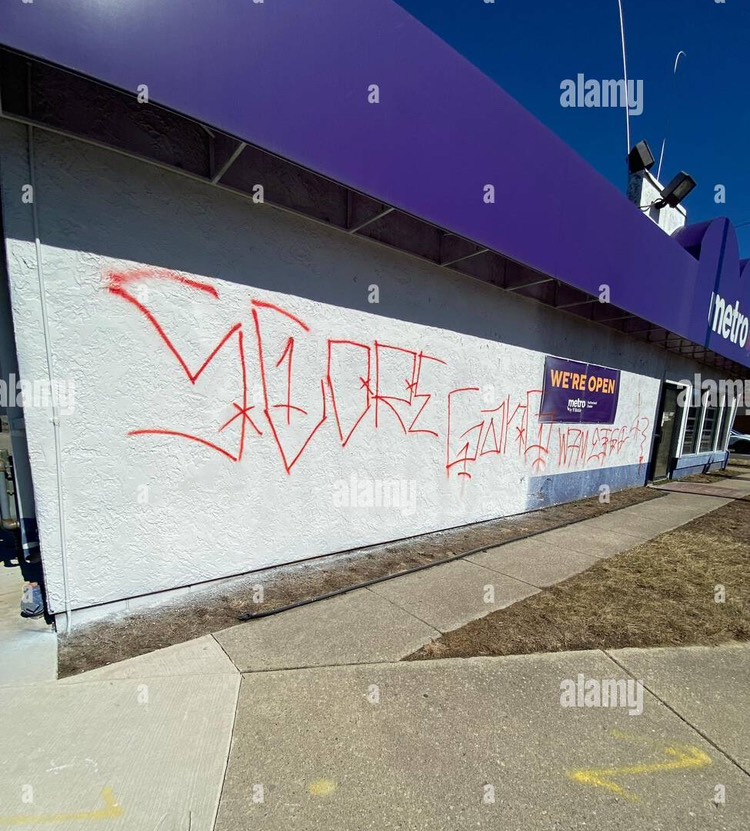
The 5Point Nation Crips (5PN)—also documented under the names ScoreGang, 5Points Crips, Hyena Crips (83GC), and 5Pointer Crips—are identified as a neighborhood-based street gang alliance primarily operating in Detroit’s Five Points area on the city’s far northwest side. Rather than functioning as a single, centralized street gang or unified set, 5PN is consistently described as a loosely organized network of Crip-affiliated street groups.
Available documentation characterizes the alliance as comprising multiple smaller street gangs and street cliques that self-identify as Crip subsets, many of which are reported to have originated from youth tagger crews and localized street groups that emerged during the mid-2010s.
The alliance is documented as being most active along the Seven Mile corridors and in portions of Redford Township, reflecting the highly localized nature of Detroit’s street-gang landscape. While group identity varies among individual subsets, affiliates commonly share visual markers, neighborhood references, and social media naming conventions associated with the Five Points community.
This page provides an overview of the alliance as reflected in community accounts, local media coverage, and publicly available law enforcement summaries. It documents naming conventions, territorial associations, affiliations, internal clique structures, reported criminal activity involving individual members, rivalries, and the alliance’s broader cultural presence within Detroit’s contemporary street culture.
For definitions of terminology related to activity, conduct, demographics, gang-related terms, identifiers, and classifications used on this page, refer to the site glossary.
For definitions of terminology related to activity, conduct, demographics, gang-related terms, identifiers, and classifications used on this page, refer to the site glossary.
The name 5Point Nation Crips (5PN) is a locally derived designation rooted in geography, coalition-building language, and Crip-affiliated symbolism as adapted within Detroit’s far northwest side. The term does not originate from a single founding event or centralized organization but instead reflects the gradual convergence of multiple neighborhood-based crews operating in and around the Five Points area.
“5Point” refers to the Five Points neighborhood of northwest Detroit (ZIP 48219), named for the convergence of major corridors—most notably West Seven Mile Road, Grand River Avenue, Evergreen Road, and Telegraph Road—that form a recognizable local landmark and social reference point. Within Detroit street culture, “5Point” functions as both a geographic marker and a shorthand for shared neighborhood identity rather than a formal territorial boundary.
“Nation” is used in an aspirational or coalition-based sense, consistent with broader street and graffiti traditions in which the term signifies unity among otherwise independent cliques. In this context, “Nation” denotes an alliance or collective identity adopted by multiple Five Points–area crews rather than a structured organization with centralized leadership. Community accounts suggest the term gained traction during the mid-2010s as tagging crews and youth cliques began coordinating imagery, language, and territorial defense across adjacent blocks and apartment complexes.
“Crips” reflects the adoption of Crip identity, symbolism, and color usage by participating gangs. While 5PN incorporates elements commonly associated with Gangster Crips (3X / Movin’ Gang) traditions—such as hand signs, numeric references, and graffiti styles—there is no verified evidence of formal affiliation with Los Angeles–based Crip sets or any national Crip hierarchy. Usage of “Crips” within 5PN is best understood as a localized identity framework shaped by Detroit’s street ecology rather than an extension of West Coast organizational structures.
Related labels such as “5Points Crips,” “5Pointer Crips,” “ScoreGang,” “Hyena Crips,” and “83GC (Hyena Crips Got Control)” appear to function as overlapping or situational identifiers. Some are used externally by media or law enforcement, while others originate from internal graffiti practices, social-media naming conventions, or specific subsets within the alliance. These terms do not represent formal renamings of the alliance but instead reflect the fluid and decentralized nature of 5PN identity.
Overall, the etymology of 5Point Nation Crips illustrates how Detroit-based street alliances often emerge organically from shared geography, youth networks, and symbolic adoption, producing names that describe collective presence and neighborhood affiliation rather than fixed organizational lineage.
For definitions of terminology related to activity, conduct, demographics, gang-related terms, identifiers, and classifications used on this page, refer to the site glossary.
*In No Particular Order*
- 5PN
- ScoreGang (SCRG) / 24000 Blocc
- 5Points Crips / 5Pointer Crips
- 5Pointz Niggaz / 5Points Gangster Crips
- Hyena Crips / H-Gang
- W7M ETGC / W7M Crips
- 83GC / 83 / Eighty-Three Gangster Crips
- Seven Mile BaccWest Crips / BaccWest ScoreGang
- W7M 8Trays / W7M 8Treys
- W7M Hyena Crips / W7M Hyenas
For definitions of terminology related to activity, conduct, demographics, gang-related terms, identifiers, and classifications used on this page, refer to the site glossary.
Primarily the Five Points neighborhood (ZIP 48219), northwest Detroit corridors along Seven Mile, and extensions into Redford.
For definitions of terminology related to activity, conduct, demographics, gang-related terms, identifiers, and classifications used on this page, refer to the site glossary.
*In No Particular Order*
- Crips
- Gangster Crips (3X / Movin’ Gang)
- 5Points Crips (Detroit-born)
For definitions of terminology related to activity, conduct, demographics, gang-related terms, identifiers, and classifications used on this page, refer to the site glossary.
Members reportedly wear blue bandannas (Navy Blue or Royal Blue) and use hand signs incorporating three fingers (associated with ‘trays/treys,’ or 3X/Movin Gang), the number 7 (referencing W. Seven Mile Road), and the letters W (‘West Side’), G (‘Gangsta/Gangster’), and C (‘Crip/Crips’). Reported graffiti identifiers include ‘83GC’ or ‘W7M 83GC’ (Hyena Crips Got Control / West 7 Mile Hyena Crips Got Control); ‘ETGC,’ ‘ETG,’ or ‘W7M ETGC’ (Evergreen Telegraph Gangster Crips / Evergreen Telegraph Gangsters / West 7 Mile Evergreen Telegraph Gangster Crips); ‘24700’ (24700 block of W. Seven Mile Road, various other block specific codes are used); ‘20-14’ (20 = T, “The”; 14 = N, “Nation”); and ‘6-16-3’ (6 = F, “Five”; 16 = P, “Pointer”; 3 = C, “Crips”). Associated colors in graffiti reportedly includes blue, black, red, and occasionally white. In conversation, on social media, and in local cultural contexts, members are often referred to as ‘5Pointers’ or ‘Hyenas.’
For definitions of terminology related to activity, conduct, demographics, gang-related terms, identifiers, and classifications used on this page, refer to the site glossary.
*In No Particular Order*
- Graffiti-related vandalism
- Minor street-level disputes
- Assaults
- Robberies
- Shootings
- Auto-thefts / joyriding
- Loitering and quality of life citations
- Transit fare evasion
- Alleged neighborhood-level intimidation
- Low-level fraud
- Theft-related incidents
- Reported disruptions of lawful or public meetings
- Small-scale narcotics possession or distribution
As with many Detroit gangs, documentation varies, and not all claims are consistently corroborated by public court records.
For definitions of terminology related to activity, conduct, demographics, gang-related terms, identifiers, and classifications used on this page, refer to the site glossary.
Reported rivalries include:
*In No Particular Order*
- Neighborhood Crip sets, primarily the Rollin 60s
- Blood-affiliated gangs, mainly Black P. Stones / Jungle Stone Bloods
For definitions of terminology related to activity, conduct, demographics, gang-related terms, identifiers, and classifications used on this page, refer to the site glossary.
The 5Point Nation (5PN) functions as a coalition of smaller cliques rather than a single gang:
*In No Particular Order*
- ScoreGang (SCRG)
- ETGC (Evergreen Telegraph Gangster Crips)
- 19000 Blocc (Bloc19)
- 24000 Blocc (24BLK) — An umbrella grouping encompassing the 24200–24800 “Blocc Crip” gangs; there is no known 24400 set.
- Two-Syxx Gang / 26Gang (26G)
- Tiny Lok Krew / Tiny Laughers Krew (TLK)
- Baby Hyenas Gang (BHG)
- Lil Mad Daly Boyz (LMDB)
- NSS Boyz
- Bloc Boy Flocc (B.B.F.)
- Northside Gutta Ave Crips (NSC)
- BigJumpshotGang (BJSG)
- Insane Angels Gang (I.A.G.)
These subsets operate semi-independently while maintaining the broader 5PN identity across Five Points and surrounding areas.
For definitions of terminology related to activity, conduct, demographics, gang-related terms, identifiers, and classifications used on this page, refer to the site glossary.
The 5PN alliance is noted for its influence on Detroit’s underground graffiti scene and local street culture. Members’ tags and music often reference neighborhood identity, territorial pride, and alliance with the “ScoreGang” or “Hyena Crips Got Control” identity. Their social presence reinforces local awareness of their turf and alliances.
For definitions of terminology related to activity, conduct, demographics, gang-related terms, identifiers, and classifications used on this page, refer to the site glossary.
The 5Point Nation Crips (5PN) are documented as a predominantly African American, Detroit-based Crip-aligned street gang alliance that began forming between 2015 and 2016. The gang traces its origins to two youth graffiti crews—Bloc Side Soldiers (B.S.S.) and North Side Soldiers (N.S.S.)—whose overlap in membership and territory gradually led to the development of a broader neighborhood identity. As additional Five Points–area tag crews began cooperating, several adopted Crip symbolism and incorporated what participants referred to as 5Point Nation literature, an internal doctrine cited in a 2025 Detroit News feature on local tagging conflicts.
By the early 2020s, sources noted a decline in Blood-affiliated activity within the Five Points area, accompanied by a marked increase in 5PN graffiti, tagging, and iconography across the 48219 ZIP code and adjacent neighborhoods. Although 5PN incorporates elements associated with West Coast Crip culture, there are no verified organizational ties to Los Angeles Crip structures or any national governing body.
Rather than functioning as a single gang, 5Point Nation is best understood as a multi-clique alliance, rooted primarily in Detroit’s far-northwest side. It encompasses a mix of local Crip-identified street cliques and tagging crews—each with its own leadership, membership, and neighborhood base—while sharing a collective Five Points identity.
For definitions of terminology related to activity, conduct, demographics, gang-related terms, identifiers, and classifications used on this page, refer to the site glossary.
Recruitment into the 5Point Nation Crips / W7M ETGC appears to occur informally, primarily through participation in youth graffiti activity and local tag crews in Detroit’s Five Points neighborhood, reflecting the gang’s origins in such networks. This mode of recruitment is consistent with broader patterns observed in Detroit, where gangs often emerge from loosely organized, youth-led cliques rather than through formalized doctrines or initiation processes. Neighborhood-based associations and school-related rivalries further contribute to recruitment, drawing adolescents from the 48219 area amid ongoing territorial tensions.
For definitions of terminology related to activity, conduct, demographics, gang-related terms, identifiers, and classifications used on this page, refer to the site glossary.
The gang’s presence in Detroit’s Five Points neighborhood has been associated with localized public safety concerns, primarily related to territorial disputes and the use of visible markers such as graffiti. These indicators point to ongoing street-level tensions rather than large-scale or formally organized criminal activity documented by law enforcement. Recorded graffiti exchanges suggest periodic interactions with other established criminal street gangs operating in or near the area, including the Black P. Stone Nation, the Rollin 60s Crips, and various local gangs and tagger crews. Over time, these interactions have manifested as sustained efforts to assert territorial presence through escalating graffiti conflicts—commonly referred to as “tag wars”—and related street confrontations. This pattern is consistent with broader dynamics of rivalry-driven territorial assertion observed among Detroit-based gangs. Reporting by The Detroit News notes that a purported Crip-affiliated individual from the area has documented these tag wars, which police characterize as potential early indicators of violence linked to attempts at establishing control.
For definitions of terminology related to activity, conduct, demographics, gang-related terms, identifiers, and classifications used on this page, refer to the site glossary.
Detroit Police Department (DPD) crime reporting does not track illegal graffiti as a distinct offense category within its publicly released statistics. Graffiti-related activity is generally captured under broader property crime classifications, such as vandalism or malicious destruction of property, in line with FBI Uniform Crime Reporting (UCR) definitions. In 2025, DPD reported 11,382 property crimes across Detroit’s westside precincts; however, these figures are not further dis-aggregated by individual precinct or by specific offense types such as graffiti vandalism, limiting precise attribution at the neighborhood level.
Gunfire detection data provides additional contextual insight into public safety conditions in the Five Points area. ShotSpotter reporting for the 8th Precinct, which includes Five Points, indicates sustained gunfire activity throughout 2025. Spatial mapping associated with these reports shows a concentration of detected shooting incidents in the southern portion of the Five Points neighborhood, particularly in areas between West Seven Mile Road and Grand River Avenue. This clustering reflects broader patterns of firearm activity within the precinct and should not be interpreted as verified involvement by any specific gang.
Taken together, these data points provide contextual background for reported street-level tensions, graffiti disputes, and public safety concerns in the Five Points neighborhood, while also underscoring the limitations of available data in directly linking individual criminal incidents to specific crews or alliances.
Notes & Verification Status
• Content reflects a mix of public records, media reporting, and community accounts.
• Intended for informational and historical reference; it is not legal documentation.
• Contemporary activity is less documented than historical presence.
• No verified connection to national Crip hierarchies.
Sources:
*Sources are listed in no particular order. Numerical placement does not indicate priority, authority, or primary-source status.*
- 1. Grokipedia 2026, 5Point Nation Crips (5PN) page
- 2. Grokipedia 2026, West 7 Mile Evergreen Telegraph Gangster Crips (W7M ETGC) page
- 3. Grokipedia 2026, Hyena Crips page
- 4. Grokipedia 2026, Five Points neighborhood, Detroit page
- 5. Detroit News Article 2025, Purported Crip-Affiliated Gang Member Documents City’s ‘Tag Wars’
- 6. 2025 Detroit Crips Mini-documentary, Most Dangerous Crip Gangs in Detroit: The Real Story of Power, Bloodshed & Survival
- 7. 2025 Detroit Bloods Mini-documentary, Most Dangerous Blood Gangs in Detroit EXPOSED: 55 Seven Mile Bloods, 82 Headbanger Bloods & More!
- 8. Alamy Stock Photos 2015-2025, “Detroit Crips Graffiti,” 330+ photos with EXIF data and detailed titles/captions used for identification and location context
- 9. Internet Archive Search, “W7M ScoreGang” shows 25 results, all with detailed infomation on the sociological aspect of their existence
- 10. Detroit Police Department Weekly Report on ShotSpotter Activity, Report Date: Monday, October 27, 2025
- 11. FBI Offense Definitions, Crime In The United States 2011
- 12. Daily Overview Crime Report, Detroitmi.gov site PDF, Tuesday, November 4, 2025
- 13. Bridge Detroit Article 2025, Detroit Police Department has mountains of crime data. Here’s how to navigate it
- 14. Detroit RMS Crime Incidents Map, Detroitmi.gov site
- 15. “Tag” definition, GangEnforcement.com
- 16. Gang Terminology, GangEnforcement.com
- 17. Street Gangs, GangEnforcement.com