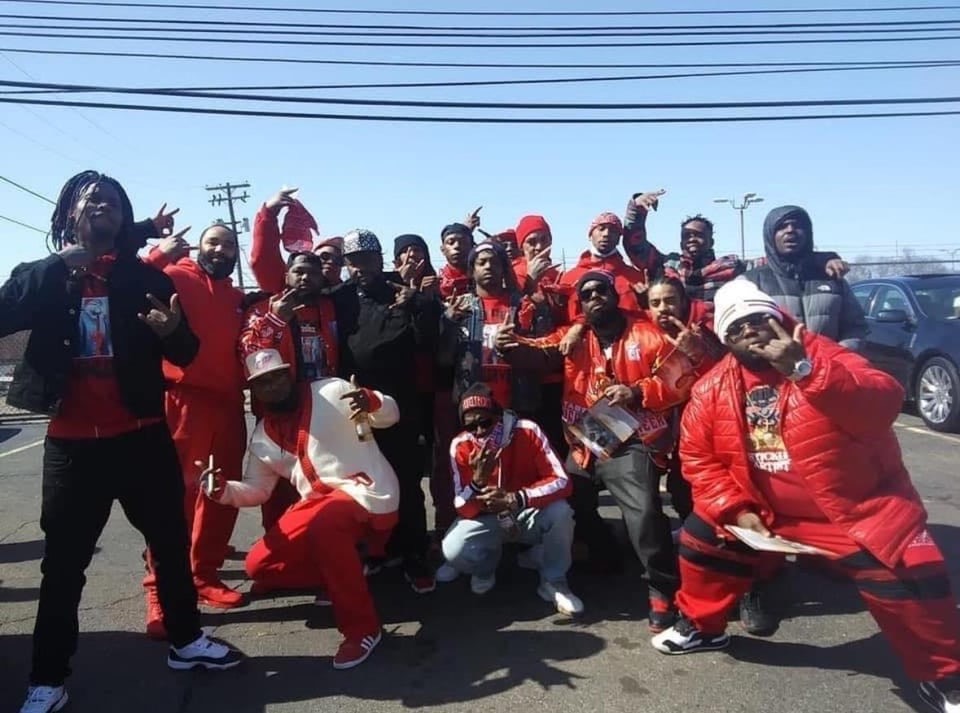
The HeadBanger Bloods—often stylized as 2082 or True HeadBangerz—are documented as predominantly African American and are considered one of Detroit’s more widely recognized and numerically substantial Blood-affiliated street gangs. Based primarily on the Eastside, their presence along Harper Avenue and within the 48213 ZIP code has positioned them as a significant force in Detroit’s Blood landscape, characterized by street-based identity, numeric symbolism, and documented conflicts with Crip- and Gangster Disciples–affiliated rivals.
For definitions of terminology related to activity, conduct, demographics, gang-related terms, identifiers, and classifications used on this page, refer to the site glossary.
For definitions of terminology related to activity, conduct, demographics, gang-related terms, identifiers, and classifications used on this page, refer to the site glossary.
The name HeadBanger Bloods is a locally derived designation reflecting numeric symbolism, eastside geography, and Detroit-specific Blood identity rather than a formal origin tied to a national Blood organization.
The term “HeadBanger” functions as a reputational label emphasizing aggression, fearlessness, and readiness for confrontation—traits commonly valorized in Detroit street culture. In local usage, “banger” has long been associated with active participation in street conflicts, while “HeadBanger” intensifies this imagery, signaling a gang identity built around toughness and dominance rather than a literal or historical reference.
The numeric identifier “2082” is the gang’s most prominent symbolic marker. Within eastside Detroit usage, “20” and “82” operate as compressed territorial and identity codes rather than formal numerology. “82” is widely interpreted in local context as a shorthand tied to HeadBanger identity and appears extensively in graffiti, social media, and music references. “2082” functions as an expanded cipher reinforcing gang unity across multiple blocks rather than indicating a specific founding date or organizational structure.
The alternative name “True HeadBangerz” (THB) serves as an internal authenticity marker, distinguishing core or fully affiliated members from peripheral associates or imitators. Use of “True” in this context aligns with broader street and rap lexicon, where it denotes legitimacy, loyalty, and adherence to gang norms rather than formal rank.
The designation “Bloods” reflects the gang’s adoption of Blood-associated symbolism, colors, and five-point imagery. Available sources characterize the HeadBanger Bloods as a Detroit-born Blood formation, shaped primarily by eastside neighborhood dynamics and rivalry structures rather than by direct lineage from Los Angeles–based Blood sets. While traditional Blood identifiers are present, their usage reflects local adaptation rather than formal integration into a national hierarchy.
Related labels such as “HB,” “82,” and “2082” appear interchangeably in graffiti, online usage, and community discourse, functioning as situational identifiers rather than evidence of separate factions. Collectively, the gang’s naming conventions illustrate a pattern common among Detroit gangs: the blending of aggressive reputation-based language, numeric shorthand, and adapted national symbolism to construct a durable neighborhood-centered identity.
For definitions of terminology related to activity, conduct, demographics, gang-related terms, identifiers, and classifications used on this page, refer to the site glossary.
*In No Particular Order*
• 2082
• THB
• True HeadBangerz
• HB
For definitions of terminology related to activity, conduct, demographics, gang-related terms, identifiers, and classifications used on this page, refer to the site glossary.
*In No Particular Order*
• Eastside Detroit — 48213
• Ravendale neighborhood
• Morningside neighborhood
• Heavy activity along Harper Ave
For definitions of terminology related to activity, conduct, demographics, gang-related terms, identifiers, and classifications used on this page, refer to the site glossary.
• Bloods (Detroit-born lineage)
For definitions of terminology related to activity, conduct, demographics, gang-related terms, identifiers, and classifications used on this page, refer to the site glossary.
*In No Particular Order*
• “2082,” “82,” and “HeadBangerz” graffiti tags
• Red bandanas (Bright Red)
• “TrueHeadBangerz” identity used in music and online
• Five-point star symbolism depending on clique or subgroup
For definitions of terminology related to activity, conduct, demographics, gang-related terms, identifiers, and classifications used on this page, refer to the site glossary.
*In No Particular Order*
• Narcotics distribution
• Robbery
• Fraud schemes
• Retaliatory disputes
• Loitering
• Transit fare evasion
• Graffiti-related vandalism
• Intoxication-related offenses
• Reported disruptions of lawful or public meetings
• Intimidation and block-level enforcement
As with many Detroit gangs, documentation varies, and not all claims are consistently corroborated by public court records.
For definitions of terminology related to activity, conduct, demographics, gang-related terms, identifiers, and classifications used on this page, refer to the site glossary.
*In No Particular Order*
• Crip-affiliated sets
• Gangster Disciples
• Additional Folk/Northside rivals depending on clique
For definitions of terminology related to activity, conduct, demographics, gang-related terms, identifiers, and classifications used on this page, refer to the site glossary.
The HeadBanger Bloods are frequently regarded as Detroit’s largest Blood set by membership, with a wide base of cliques spread across the eastern 48213 ZIP code. Their identity is heavily tied to the numeric cipher 2082—a code that appears in graffiti, social media, and local drill references tied to Harper Ave.
THB developed as a Detroit-born Blood formation rather than a direct national transplant, adopting traditional Blood symbolism while evolving their own block-specific culture. The set is known for its size, decentralization, and ability to maintain influence across Ravendale and Morningside despite consistent conflicts with Crip and Folk-affiliated crews.
Their footprint in local music, online posting, and block-centric street identity has reinforced the “HeadBangerz” brand as one of the dominant Blood presences on Detroit’s Eastside.
For definitions of terminology related to activity, conduct, demographics, gang-related terms, identifiers, and classifications used on this page, refer to the site glossary.
The HeadBanger Bloods’ presence on Detroit’s eastside—particularly within the 48213 ZIP code encompassing Ravendale, Morningside, and the Harper Avenue axis—has been associated with sustained law-enforcement attention due to the gang’s size, visibility, and involvement in recurring street-level conflicts. Unlike smaller hyper-local gangs, HeadBanger Bloods are frequently referenced in police reporting and media coverage as a dominant Blood-identified presence on the eastside, with activity extending across multiple blocks rather than a single micro-territory.
Law-enforcement narratives commonly link the gang to retaliatory disputes with Crip-affiliated and Folk-aligned rivals, including shootings and armed confrontations that form part of longer-running eastside rivalry cycles. These conflicts are generally framed by authorities as decentralized and clique-driven rather than the result of centralized command structures, reflecting Detroit’s broader pattern of fragmented gang organization. Police reporting emphasizes that while individual members or subgroups are implicated in serious incidents, the gang as a whole operates as a loose network of block-based cliques rather than a formally organized criminal enterprise.
Graffiti bearing identifiers such as “2082,” “82,” and “HeadBangerz” is routinely cited in enforcement and community reports as a visibility marker rather than direct evidence of specific criminal acts. Law enforcement assessments typically treat such markings as indicators of territorial assertion and rivalry signaling, often preceding or following periods of heightened tension rather than serving as standalone criminal indicators.
For definitions of terminology related to activity, conduct, demographics, gang-related terms, identifiers, and classifications used on this page, refer to the site glossary.
The HeadBanger Bloods operate primarily within areas covered by Detroit’s 9th Precinct, which includes large portions of the city’s eastside and is consistently among the precincts with elevated rates of violent and property crime. Detroit Police Department (DPD) public crime data does not attribute incidents to specific gangs or sets, limiting the ability to directly link reported crimes to HeadBanger Bloods as an organization.
As with other precincts, DPD does not maintain a standalone category for illegal graffiti; graffiti-related conduct is captured under broader property crime or vandalism classifications consistent with FBI Uniform Crime Reporting (UCR) definitions. As a result, while graffiti associated with 2082 or HeadBanger identifiers is frequently noted anecdotally by residents and officers, it cannot be quantitatively isolated within official crime statistics for the 9th Precinct.
Gun violence data provides broader environmental context for the gang’s operating area. Shot detection and shooting incident mapping for the eastside show recurring concentrations of firearm activity along major corridors such as Harper Avenue and within adjacent residential blocks of Ravendale and Morningside. These patterns reflect long-standing structural and rivalry-driven violence in the 9th Precinct and should be interpreted as neighborhood-level conditions rather than verified attribution to any single gang.
Overall, law-enforcement and crime data frame the HeadBanger Bloods as a significant eastside presence operating within a high-conflict environment, while also underscoring the limits of available data in conclusively assigning specific criminal incidents to the gang as a unified entity rather than to individual members or affiliated cliques.
For definitions of terminology related to activity, conduct, demographics, gang-related terms, identifiers, and classifications used on this page, refer to the site glossary.
*In No Particular Order*
• TrueHeadBangerz (core identity)
• Various 2082 and 82-tagged micro-cliques across Harper
• Smaller Ravendale and Morningside subgroups
Notes & Verification Status
Information is compiled from public records, community reports, and law enforcement sources.
Use of this page is for informational and historical purposes; it is not legal documentation.
Sources:
*Sources are listed in no particular order. Numerical placement does not indicate priority, authority, or primary-source status.*
- 1. Grokipedia 2026, Headbanger Bloods Page
- 2. 2016 Article, Former Detroit Gang Member, Now Gang Peacemaker
- 3. 2025 Detroit Bloods Mini-documentary, Most Dangerous Blood Gangs in Detroit EXPOSED: 55 Seven Mile Bloods, 82 Headbanger Bloods & More!
- 4. 2025 Detroit Gangs Mini-documentary, Detroit’s Most Dangerous Gangs: Secrets of the Streets Revealed
- 5. Detroit Police Department Weekly Report on ShotSpotter Activity, Report Date: Monday, October 27, 2025
- 6. FBI Offense Definitions, Crime In The United States 2011
- 7. Daily Overview Crime Report, Detroitmi.gov site PDF, Tuesday, November 4, 2025
- 8. Bridge Detroit Article 2025, Detroit Police Department has mountains of crime data. Here’s how to navigate it
- 9. Detroit RMS Crime Incidents Map, Detroitmi.gov site
- 10. “Tag” definition, GangEnforcement.com
- 11. Gang Terminology, GangEnforcement.com
- 12. Street Gangs, GangEnforcement.com