Detroit’s “Tag Wars” Explained
For definitions of terminology related to activity, conduct, demographics, gang-related terms, identifiers, and classifications used on this page, refer to the site glossary.
The phenomenon known as the “Tag Wars” in Detroit, Michigan, refers to a highly volatile period of conflict between rival street gangs. The conflict began building throughout the early 2010s, involving prominent groups such as the Band Crew, Playboy Gangster Crips, Bounty Hunter Bloods, Brightmoor Gangster Crips, and others. It reached another peak between 2024 and 2025, particularly amid tensions between groups such as the Black P. Stone Bloods and ScoreGang Crips. During these disputes, physical graffiti became a tool for territorial claims, self-aggrandizement, physical intimidation, and psychological warfare, as described by a Detroit-based Crips-affiliated street figure who goes by the name “Tiny Joker.”
Unlike traditional tagger crews, which spray-paint property to promote an artistic alias or gain personal recognition, gang-affiliated tag wars use coded markings to communicate disrespect, mark drug-distribution territory, and issue direct, sometimes violent threats. For example, Crips-affiliated street gangs in Detroit, consistent with practices associated with Crips groups elsewhere, often use the phrase “Blood Killa,” or “BK,” to express hostility toward Bloods-affiliated gang members.
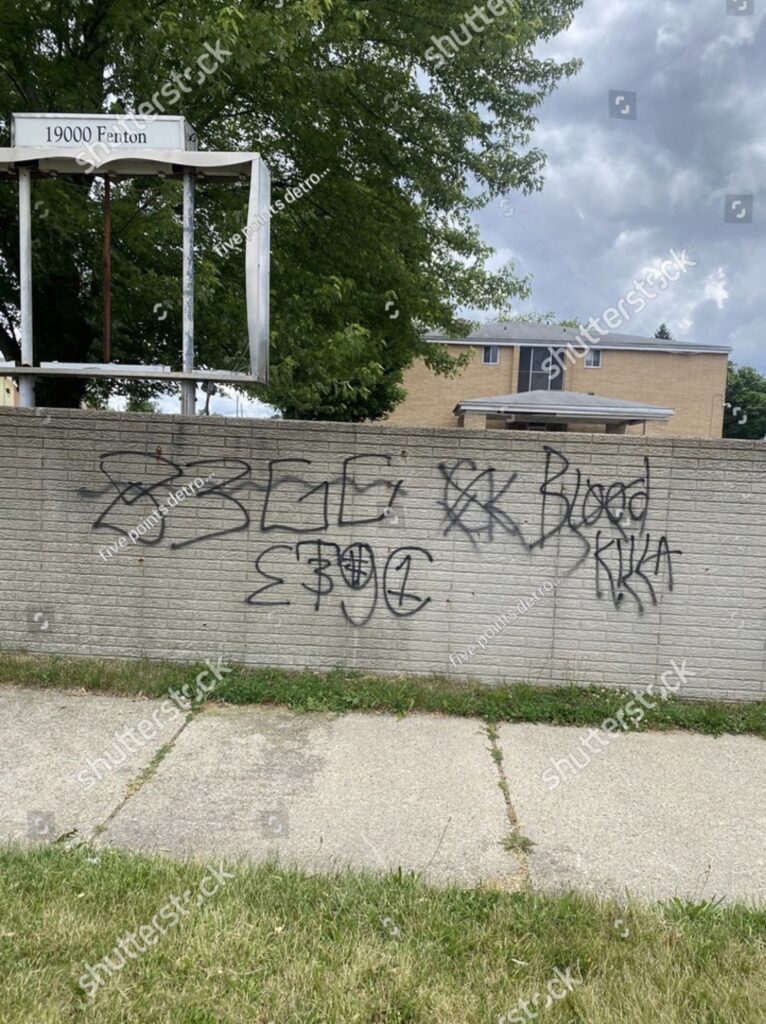
Taggers vs. Gang Tagging (“Tag Banging”)
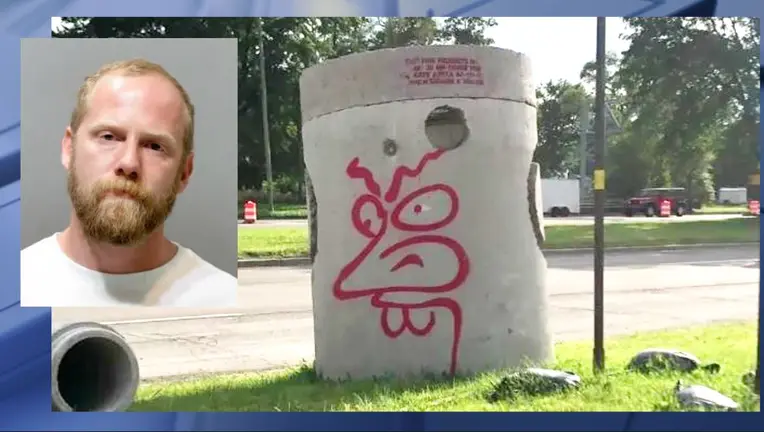
Detroit’s graffiti culture encompasses two distinct subcultures, although the distinction can become blurred for people unfamiliar with the activity. Traditional tagger crews are generally small groups, ranging from just a couple of people to around a dozen, focused on artistic expression, lettering styles, and making their aliases visible across as many surfaces as possible. Their activity is not necessarily tied to a specific territory, and taggers are not automatically affiliated with organized crime. Their vandalism must be distinguished from other criminal activity rather than treated as proof of gang involvement. One Metro Detroit example is a tagger known as “BVIS,” who reportedly painted thousands of Beavis and Butt-Head character heads on buildings, fences, and supermarket properties throughout the area. BVIS allegedly tagged as many as 20 times per night before being arrested in June 2024 and facing six felony counts of malicious destruction of property. In July 2024, 36th District Court Judge Ronald Giles dismissed the case without prejudice after ruling certain key documents and witness testimony inadmissible, although prosecutors reportedly evaluated an appeal. The case illustrates the distinction between prolific graffiti activity and gang-related tagging.
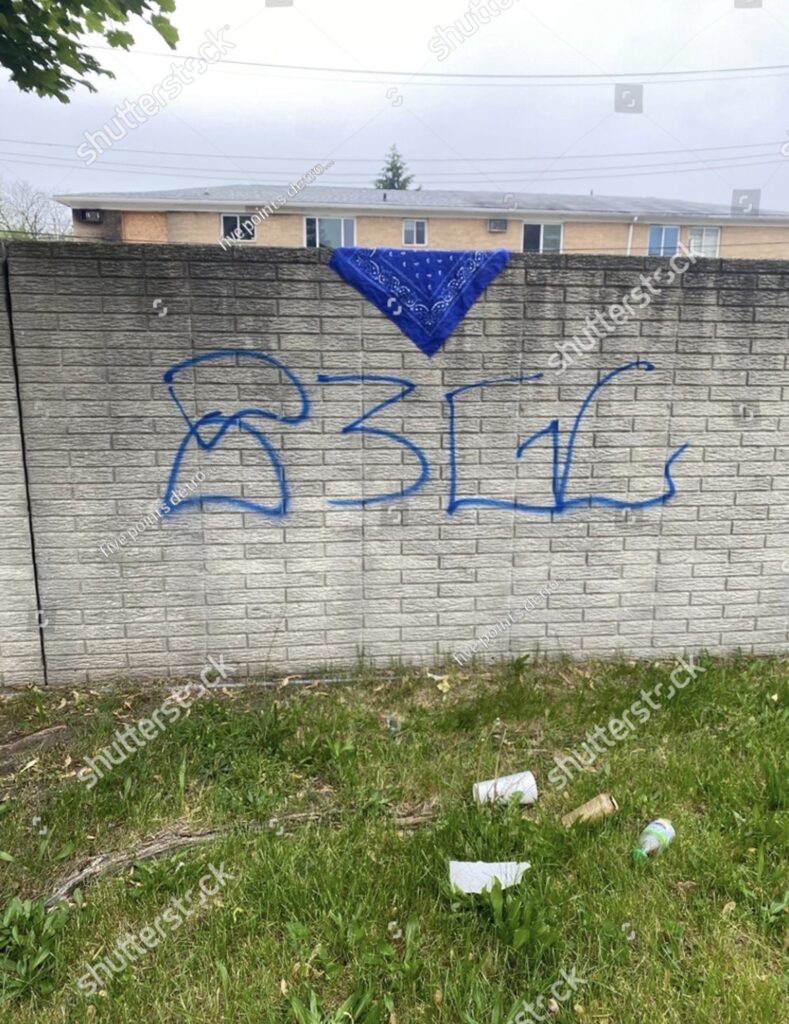
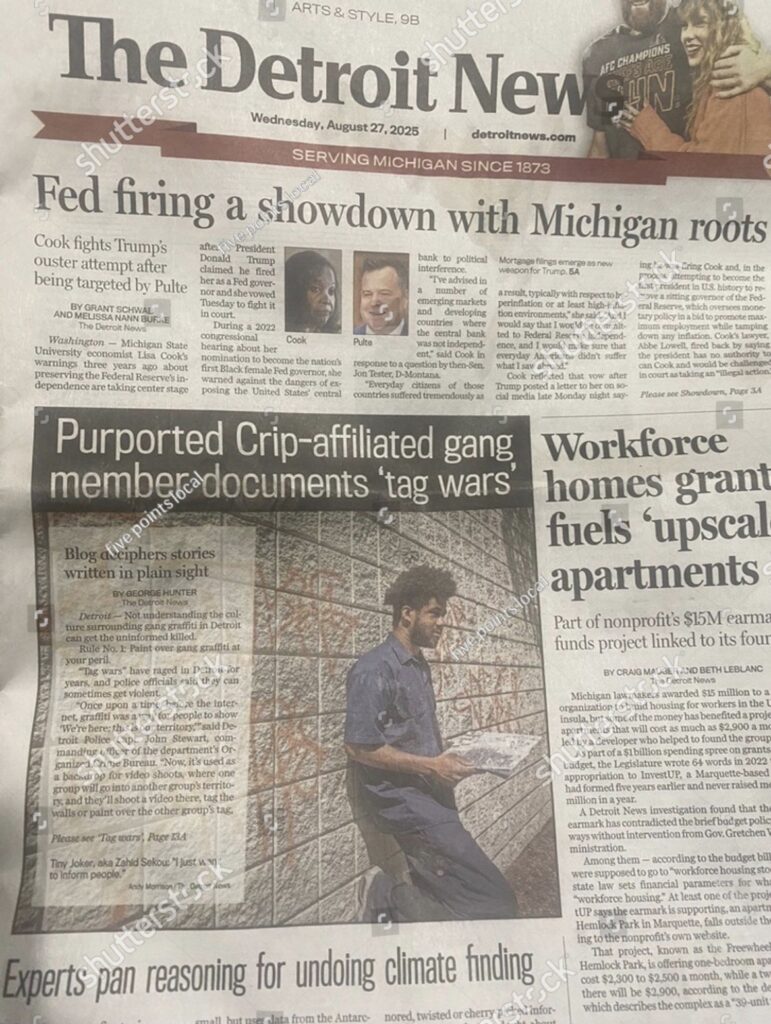
Gang tagging, by contrast, is tied to the reputation, perceived power, territorial claims, and self-aggrandizement of a particular street gang or set. These markings function as a coded, nonverbal language through which groups communicate with rivals and neighborhood residents. For example, the ScoreGang, also known as the Hyena Crips in the context discussed here, has been associated with alphanumeric markings such as “83G” and “83GC.” In an August 2025 investigative article, The Detroit News interviewed Zahid Sekou, known as “Tiny Joker,” a purported Crip-affiliated gang member who explained the meaning of these identifiers. According to that explanation, “83GC” stands for “Hyena Crips Got Control,” with “8” representing the eighth letter of the alphabet, H, for Hyena, and “3” representing the third letter, C, for Crips, while “GC” stands for “Got Control.” Similarly, “83G” is interpreted as “Hyena Crips Gang.” These examples illustrate how coded identifiers can communicate group identity, territorial claims, and intimidation.
The Mechanics of a Tag War
A tag war operates like an ongoing, real-world scoreboard in which rival groups compete for visibility and perceived dominance. Street gangs spray-paint their set’s initials, symbols, and identifiers on walls, abandoned buildings, and highly visible corridors to assert a presence and claim territory. When a rival paints over a tag, alters a symbol, cracks or flips an identifier, or writes a hit list over existing graffiti, the act can be interpreted as a serious sign of disrespect. In Detroit’s street culture, crossing out a rival’s tag can carry a risk of physical violence. The conflict can also extend to social media, where gangs film music videos or take photographs in front of their own freshly painted markings and defaced rival tags to amplify the humiliation and broadcast the dispute to a wider audience.
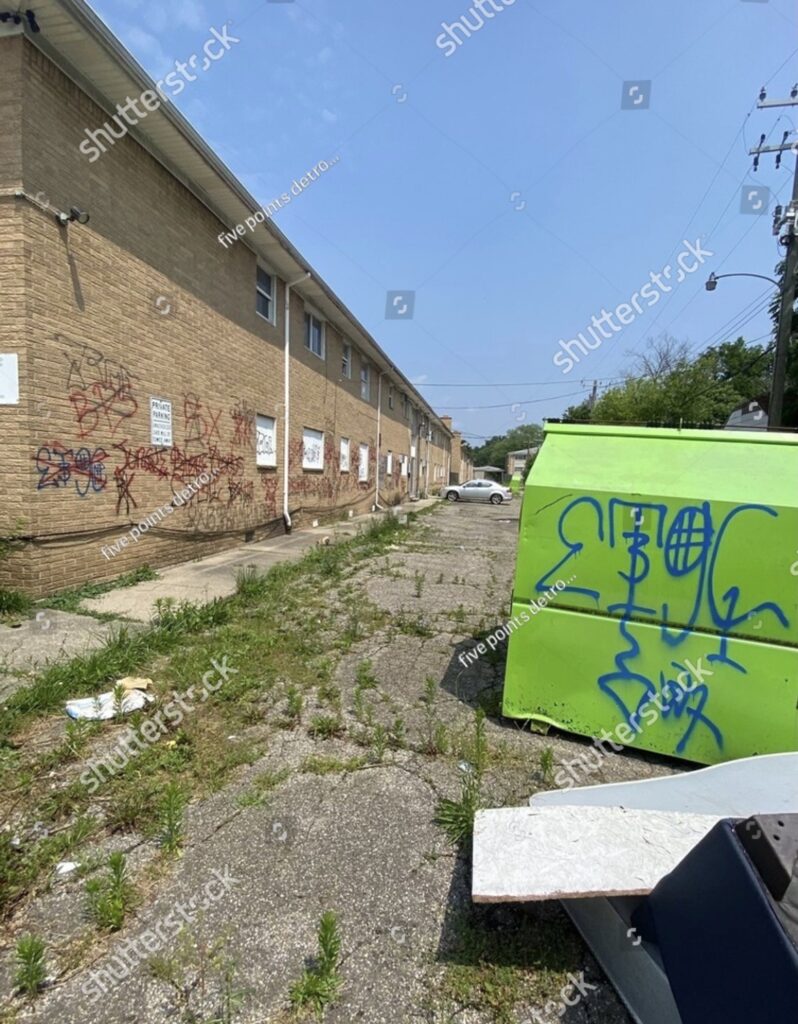
Key Players and Sets
Detroit’s tag wars have drawn attention from the Detroit Police Department’s Organized Crime Bureau and federal agencies such as the Bureau of Alcohol, Tobacco, Firearms and Explosives. Groups and individuals associated with the disputes include Crips-affiliated factions such as ScoreGang (SCRG), also identified in the source material as W7M Evergreen Telegraph Gangster Crips and Frisbee Street Crips, along with groups referred to as Hyena Crips and 5Point Nation (5PN). These groups have been linked to the city’s recent surge in gang-related graffiti.
Under current city ordinances, property owners may face fines for failing to remove unauthorized graffiti, with penalties reportedly beginning at approximately $130 for a first citation. Additional removal and remediation costs may apply and vary depending on the size, location, and nature of the markings.
Across multiple online platforms, including Alamy, Shutterstock, Flickr, YouTube, and Reddit, the ScoreGang Crips (SCRG)—also identified as the West 7 Mile Evergreen-Telegraph Gangster Crips (W7M ETGC), or the “Hyena Crips” (83GC)—have been associated with an estimated 350–500 or more documented graffiti tags and markings, predominantly dating from 2024–2025. These markings reportedly incorporate the group’s insignia and associated symbolism. Using the approximate $130 first-citation figure as a simplified benchmark, and disregarding differences in size, location, and removal expenses, the estimated financial impact would range from $45,500 to $65,000. This is merely an illustrative estimate rather than a verified assessment of actual property damage, municipal fines, or remediation costs.
Nevertheless, if independently substantiated, the volume of graffiti-related activity could represent a substantial burden on Five Points property owners and the surrounding community. The estimated figure also exceeds Michigan’s $10,000 felony property-damage threshold, although graffiti citations, cumulative municipal penalties, and criminal property-damage assessments are legally distinct matters and should not automatically be treated as equivalent.
Beyond graffiti-related activity, allegations of broader criminal involvement—including drug distribution, robberies, coercion, and illegal gambling—raise additional concerns about the potential impact of organized gang activity on neighborhood safety and stability. These concerns contributed to the group’s emergence as a subject of local news coverage in late 2025.
The graffiti-related disputes, commonly characterized by local residents as “tag wars,” reportedly intensified following SCRG’s alleged expansion into territory formerly associated with the MOB Assassin Piru gang at the now-demolished Beyond The Gates apartment complex, located at 18980–19000 Fenton. Residents have attributed the subsequent escalation to conflicts involving the Bloods-affiliated BPS street gang, with reports of armed street-level confrontations between the groups. Collectively, these disputes have reportedly contributed to collateral damage affecting local businesses, private property owners, and neighborhood stability throughout Five Points and the broader West Seven Mile–Telegraph–Grand River corridors.
To put the $45,500–$65,000 baseline estimate and the surrounding destruction into perspective, it is important to examine the scale of the damage in relation to Michigan’s criminal statutes, Detroit’s citywide graffiti enforcement efforts, and the typical concentration of neighborhood graffiti. The estimates indicate that the documented damage could exceed Michigan’s highest felony property-damage threshold by more than four to six times. Under Michigan law (MCL 750.377a), property damage of $1,000 or more can constitute a felony, while damage totaling $20,000 or more falls within the state’s highest felony tier for malicious destruction of property, carrying a potential prison sentence of up to 10 years. Even the conservative $45,500 baseline estimate, based solely on the documented markings attributed to a single gang set, exceeds that highest threshold by more than double. For additional context, when Detroit police arrested the prolific tagger known as “BVIS” in 2024, who had painted thousands of Beavis and Butt-Head images throughout the metropolitan area at a rate of up to 20 per night, he was initially charged with six felony property-damage counts. By comparison, ScoreGang’s 350–500 or more documented markings were concentrated within a substantially smaller commercial and residential area.
The concentration becomes even more significant when compared with Detroit’s broader graffiti enforcement history. During Mayor Mike Duggan’s first three-year, citywide graffiti crackdown, which covered all 139 square miles of Detroit, the total fines issued amounted to approximately $1.2 million. Against that backdrop, an estimated $45,500–$65,000 in baseline fines attributable to a single gang set within an approximately 0.4-square-mile area surrounding Five Points represents a substantial concentration of property damage within one neighborhood. The upper estimate of $65,000 accounts only for citations associated with surface spray-paint vandalism and does not capture the broader economic consequences of the destruction. Emergency commercial demolitions, including the demolition of a multistory apartment complex such as Beyond the Gates (18980–19000 Fenton), can independently cost taxpayers tens or even hundreds of thousands of dollars. When these additional expenses are considered, the overall economic toll associated with the Five Points conflict could extend well into the hundreds of thousands of dollars, apart from the immeasurable human cost and the irreplaceable loss of life. Within a 0.4-square-mile footprint, representing approximately 0.28% of Detroit’s total land area, 350–500 documented markings alone translate to roughly 875–1,250 markings per square mile. This illustrates the extraordinary density of graffiti concentrated within such a limited geographic area.
Five Points is geographically bounded by Eight Mile Road to the north, Telegraph Road to the east, Grand River Avenue to the south, and Five Points Street to the west. Within these boundaries, the 350–500 or more documented markings attributed to a single gang set, alongside cross-outs and retaliatory markings from rival sets, demonstrate how extensively the conflict extended across the neighborhood’s physical environment. Commercial storefronts, utility poles, vacant buildings, and other publicly visible structures along these corridors were repeatedly exposed to competing graffiti. Consequently, the generation of tens of thousands of dollars in estimated baseline fines within an area smaller than half a square mile illustrates how a relatively small section of Northwest Detroit could absorb a disproportionately large concentration of property damage, cleanup demands, and enforcement costs.
Unlike larger neighborhoods where industrial properties or undeveloped land may create separation between commercial corridors and residential streets, Five Points has a compact urban layout in which residential blocks such as Fenton, Winston, and Greydale sit immediately behind heavily marked commercial corridors along Grand River and Seven Mile. This close proximity left residents and families with little physical separation from the visible consequences of the conflict. The situation was further intensified by the geographic proximity of surrounding gang territories, including Five Points (SCRG, 5PN, and WAGB), Seven Mile-Rouge (BPSN, and ASGB), Berg-Lahser (R40s & R60s Crips), and The Eye (R100s, PBC, and 107 HCG). Because these neighboring areas share boundaries and occupy a relatively confined section of Northwest Detroit, competing territorial claims and retaliatory activity were concentrated within an interconnected network of commercial corridors and residential streets. The result was not simply isolated graffiti on individual properties, but a widespread pattern of overlapping territorial markings that extended into the everyday surroundings of residents, businesses, and families.
One figure who gained wider attention for documenting Detroit’s tag wars is Zahid Sekou, known as “Tiny Joker.” In August 2025, The Detroit News published a front-page investigative article about his documentation efforts, which included a blog and physical maps. The article described him as a purported Crip-affiliated gang member and examined the broader significance of gang graffiti in Detroit.
The disputes also involve rival Bloods-affiliated groups, including the Black P. Stone Bloods, Wormer Avenue Gangsta Bloods, Appleton Street Gangsta Bloods, Bounty Hunter Bloods, and 55 Seven Mile Bloods, as well as neighborhood-specific crews such as the 42 Hustle Boys and Band Crew.
Evolution: From the Walls to Social Media
Although physical graffiti remains highly visible on Detroit’s streets, law-enforcement crackdowns, including federal RICO indictments in gang-related cases, have contributed to the movement of some disputes into digital spaces. Contemporary tag wars increasingly combine physical markings with online activity. Tags are photographed, analyzed, and discussed on social media, while street disputes can escalate through Instagram hit lists, diss tracks, and other online content. The result is an environment in which physical vandalism and digital confrontation reinforce one another.
The Epicenter
Detroit’s Five Points neighborhood, within the 48219 ZIP code area, is described in the source material as a central location in the city’s tag wars. The activity has been concentrated around Grand River Avenue, where formerly operating businesses and residential properties have deteriorated, been demolished, or remained vacant. Walls, tree trunks, commercial properties, dumpster enclosures, sidewalks, and even FedEx box trucks have become surfaces for neighborhood-based and hybrid street-gang factions to mark territory and communicate threats.
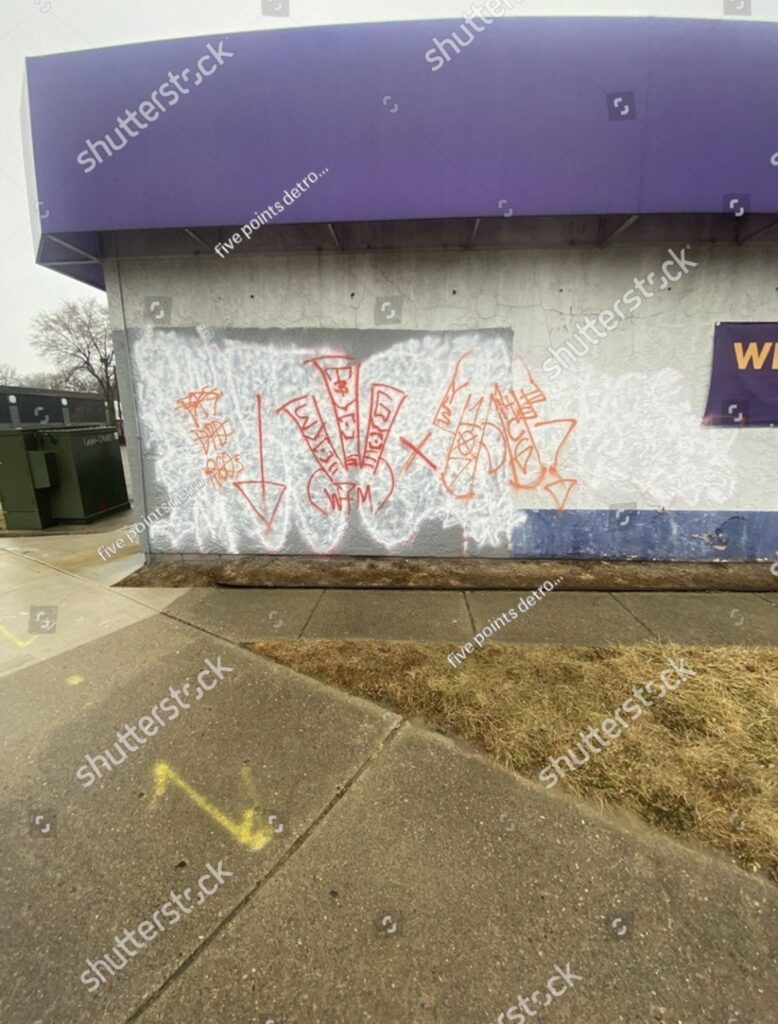
The Metro by T-Mobile storefront at 24150 Grand River Avenue, near Grand River Avenue and Telegraph Road, serves as a prominent example of how persistent gang-related graffiti affected local retail, resulting in economic loss. The standalone, 1,590-square-foot property (reportedly) closed permanently in early 2026 after prolonged “Crips vandalism” allegedly made continued operations financially and operationally unviable. The storefront walls were repeatedly covered with gang-related graffiti, particularly associated with local Crips factions, including the ScoreGang (SCRG), identified formally as the West 7 Mile Evergreen-Telegraph Gangster Crips (W7M ETGC). Some markings went beyond simple gang identifiers and included coded language characterized as intimidation and explicit threats.
Among the markings described were three-finger hand signs associated with ETGC, including a small “3” overlapping the letter “T” in an identifier associated with 8Tray; “H” hand-sign graffiti attributed to the transient 107 HCG faction and its Hoover-card affiliation; downward arrows interpreted as claims of territorial dominance; and “K” diss tags directed at rival groups and law enforcement. Examples cited include “DPDK,” interpreted as Detroit Police Department Killers; “BPSK,” referring to Black P. Stone Killers; “R60K,” referring to Rollin 60s Killers; and “R100K,” referring to Rollin 100s Killers.
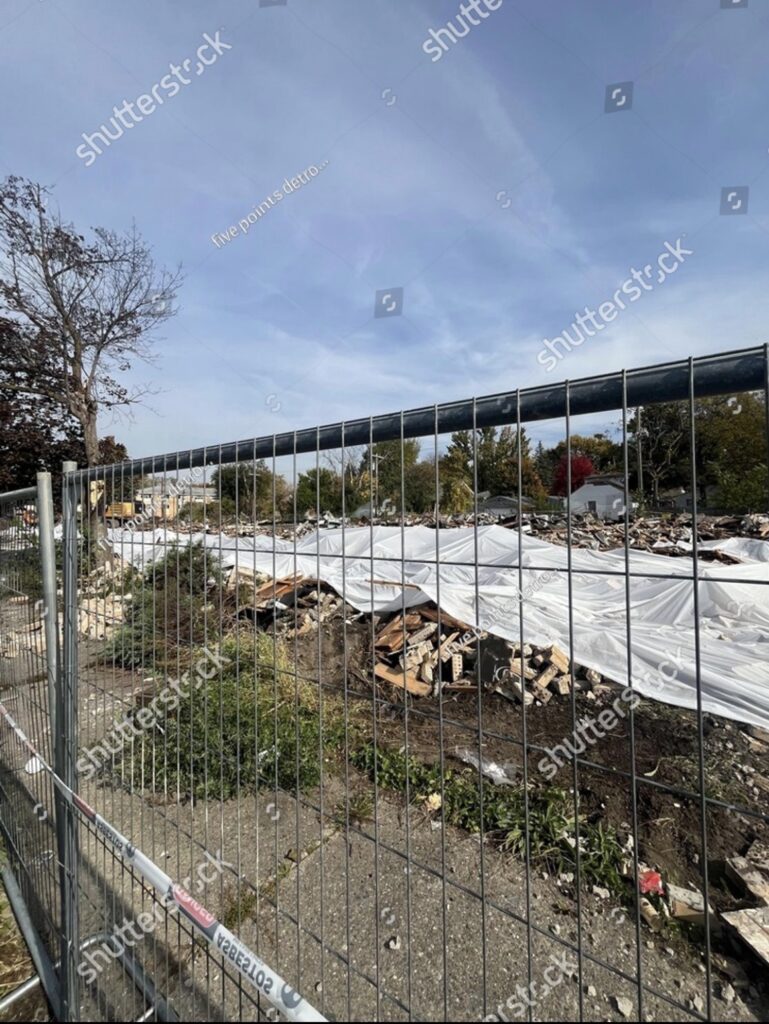
Another significant location was Fenton Street, a short distance from the Metro storefront along Grand River Avenue. The site of the former Beyond the Gates Apartments became a focal point of the physical conflict. The 1.21-acre parcel once contained a multistory residential complex where rival groups, including W7M ETGC, W7 BPS (West 7 Mile Black P. Stones), and intermittently “WAGB” (Wormer Avenue Gangsta Bloods), reportedly engaged in armed (and unarmed) altercations while competing to cross out one another’s gang-related graffiti. Neighborhood sources linked a fatal shooting in the complex’s alleyway on December 18, 2025, to the ongoing gang-related graffiti feud. Two local men known as “Relle,” identified as 46-year-old Larelle King, and “Juan,” identified as 31-year-old Dijuan Ward, were reportedly shot and killed at approximately 3:30 p.m.
After the properties were condemned, they were allegedly targeted by arsonists. The southern building nearest Grand River Avenue sustained severe fire damage on July 7, 2026, followed by another major fire on September 10, 2026, which gutted the northern building, which had previously sustained minor fire damage. The City of Detroit subsequently demolished both buildings, identified as 101 and 102. The persistence of rival ETGC and BPS markings, reportedly still visible in the rubble as the structures were leveled, became a stark illustration of how deeply the conflict had marked the physical landscape.
Stock photography websites (such as: Alamy and Shutterstock) have documented hundreds of gang-related markings throughout Detroit, particularly in Five Points. The volume of graffiti observed during the height of the tag wars, which developed throughout the 2010s and continued into 2026, can be understood through several overlapping physical, social, and digital factors.
One major factor was the availability of abandoned and unmonitored property. Following Detroit’s 2013 municipal bankruptcy, vacant commercial storefronts, condemned homes, and abandoned schools, including Abner Larned Elementary, contributed to an increasingly deteriorated urban landscape in areas such as ZIP code 48219. These properties provided extensive open surfaces for graffiti writers and neighborhood-based groups to paint gang names, throw-ups, coded identifiers, and territorial claims.
Another factor was the cycle of overlapping territorial claims and cross-outs. When one faction, such as W7M ETGC, painted a territorial marker, a rival group, such as W7 BPS, could respond by crossing it out, altering its symbols, or painting a threat such as “BPSK” or “R60K” over it. This tit-for-tat cycle multiplied the number of markings on contested properties. A single wall could be repainted dozens of times over several days or weeks, creating dense layers of competing graffiti.
Gang tagging also differs from purely artistic graffiti because its meaning can be tied to territorial disputes, intimidation, and other street-level criminal activity. In some instances, the act of painting a gang identifier may coincide with loitering, the possession of firearms, or confrontations with rivals. This is why the activity is sometimes described locally as “tagger banging,” a play on the older term “gang banging.” The phrase distinguishes gang-related tagging, which carries an explicit social and territorial message, from graffiti undertaken primarily for artistic expression or recognition.
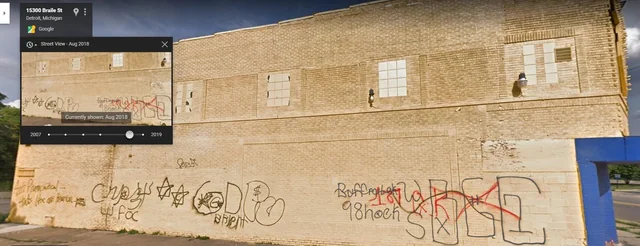
The emergence of coalitions and collaborative tagging also contributed to the proliferation of markings. Federal authorities have described the Band Crew as a large gang composed of smaller gangs that formed an alliance. By the end of the 2010s, collaborative tagging had become another visible feature of Detroit’s graffiti landscape. The Brightmoor Gangster Crips (BGC) and Brightmoor Gangsters (BMG), for example, were reportedly known to tag together in their neighborhood. Local intelligence and photographic documentation have also captured large murals in which allied factions painted alongside one another, including markings on the former Metro by T-Mobile storefront. A W7M ETGC three-finger hand sign beside a Y.L.S. 107 HCG “H” sign was interpreted as evidence of multiple factions marking the same property to display affiliation and unity.
Digital amplification further transformed Detroit’s street-gang culture by turning physical graffiti into online content. In August 2025, The Detroit News documented how Zahid Sekou, known as “Tiny Joker,” cataloged and mapped physical tag wars through a blog and digital tracking. As markings were photographed, interpreted, and circulated online, their significance extended beyond the immediate neighborhood. Numeric identifiers such as “83GC,” interpreted as “Hyena Crips Got Control,” became part of the online discussion surrounding the groups and their physical presence.
Data Pollution Surrounding The Tag Wars
This digital attention also generated echo-chamber spam posts and increasingly deranged comments questioning the authenticity and identity of particular gangs involved in the “Tag Wars.” On Reddit, a user identified as Torry Devon Jackson Jr., known as “30kTorry” on Instagram, has repeatedly characterized the ScoreGang as fictitious or challenged interpretations of its identifiers. According to various local accounts, Torry contacted Tiny Joker through Instagram in May 2025 to ask about adopting the “W7M” moniker to represent what was described as a fictitious gang he dubbed “W7M 73GC.” After the request was emphatically declined, Torry allegedly began publishing posts targeting Tiny Joker and the ScoreGang. These posts reportedly included claims that the ScoreGang identified as a direct offshoot of the Los Angeles Eight Tray Gangster Crips, which it has not claimed to be, as well as name combinations such as “83GC ScoreGang,” which members of the local community consider deeply misleading. These allegations should be distinguished from independently documented facts about the individuals involved.
Torry has also promoted the name “Westside Deadly Movin Gangsters Crips 73” (WSDMGC73), which he has presented online, primarily from 2024 onward according to a review of Reddit post histories, as an offshoot of the “Westside 73 Gangster Crips” (WS73GC). However, the available documentation does not establish that WSDMGC73 or WS73GC is an active gang in either Los Angeles or Detroit, nor does it verify the claimed organizational lineage. Sources also provide conflicting or limited information about the alleged Westside 73 Gangster Crips. StreetGangs.com describes the group as defunct, while UnitedGangs.com erroneously places it on Los Angeles’s Westside, identifies it as the “73 Hustler Crips,” and cites a 2009 gang injunction involving a safety zone around Fremont High School. That school is located on the Eastside, and the cited official document does not mention “Westside.” According to discussions among California residents and Los Angeles locals, including Reddit users, more recent references to WSDMGC73 consist largely of online posts dating from 2025 onward. Critics argue that claims about the group’s existence and organizational history originate primarily from Torry and two other individuals known online as “Lady Dlow” and “Lil Dlow,” who are alleged to be siblings. Torry has also reportedly published posts claiming the existence of “73 Gangsters Crips” in Michigan, associating the name with his hometown of Clarkston. The terminology itself “Gangsters Crips,” is inconsistently rendered across various online discussions and slang definitions, further complicating attempts to establish a reliable organizational history. In discussions among Los Angeles gang researchers, historians, and local posters, a standalone, active “W/S 73GC” set on the Westside of South Los Angeles—sometimes styled as “WS73GC”—is frequently characterized as extremely exaggerated, largely unsubstantiated, or effectively defunct. Posters in communities such as r/CaliBanging and r/CaliConnection have described the claims as an “internet myth.” Some discussions point to alleged out-of-state or suburban online roleplaying, including claims of an expansion set in Clarkston, Michigan, and digital gang-map content associated with “30kTorry.” Critics contend that these online narratives construct an elaborate account of a decades-long “Westside 73GC” rivalry with Neighborhood Crips that does not align with established accounts of Los Angeles street geography. These assessments reflect the views expressed in online discussions and should not be mistaken for independently verified findings about every individual or alleged affiliation. The spam posts and online claims attributed to Torry and individuals associated with the Dlow names illustrate how social media can blur the distinctions between established street-gang identities, localized affiliations, and names circulated primarily through digital platforms. At the same time, dismissing a Crip-affiliated group as fictitious without understanding its local context can create confusion and potentially dangerous misunderstandings. As reporting and law-enforcement attention surrounding Detroit’s “Tag Wars” demonstrate, gang-related graffiti can communicate territorial presence and project power in neighborhoods where rival groups have engaged in prolonged street-level conflicts. The graffiti associated with the ScoreGang should therefore be examined within the broader context of documented territorial disputes, local affiliations, and the history of the neighborhoods involved—not reduced to an artistic exercise or confused with unrelated online narratives. The earlier mentions of the storefront closure (Metro By T-Mobile) and building demolition (Beyond The Gates) are to provide concrete, undeniable evidence of the economic ruin, physical destruction, and deadly violence caused by the “Tag Wars” in Five Points. The closure of the Metro by T-Mobile storefront serves as a direct example of how gang-related tagging actively destroys local businesses. The Beyond the Gates Apartments became a violent flashpoint where rival factions engaged in physical shootouts just to cross out each other’s tags. Even after the abandoned complex was (allegedly) burned by arsonists (and later completely leveled by the city), rival gang tags (“BPSN,” “5X,” and “ETGC”) were still visible in the raw rotting structures—proving how deeply the conflict altered the physical neighborhood of Five Points. Ultimately, these examples serve as a reality check against the recent surge in online data pollution surrounding this particular topic (and individuals associated). While keyboard commentators (like “Torry”) argue on anonymous platforms like Reddit about whether these groups and gangs are “fake,” DSG’s (OSINT) research points to permanently closed retail stores and demolished residential blocks to show that the real-world impact on Detroit residents is devastatingly real, and cause serious (active) concern for the Five Points area. The 2024–2025 “Tag Wars” had a severe, destructive byproduct effect on the Five Points neighborhood (ZIP code 48219), completely altering its physical landscape, local economy, and community safety. What began as property vandalism directly mutated into physical bloodshed and urban-decay. Neighborhood-based street gangs within Five Points (such as the “ScoreGang”) used walls, sidewalks, and commercial structures like a real-world scoreboard, where crossing out a rival gang’s tag carried an immediate threat of retaliation. The conflict known as the “Tag Wars” accelerated the physical decay of the Five Points neighborhood’s infrastructure, beyond a reasonable doubt. Contested spaces (including local stores) became magnets for further crime once they were abandoned or condemned due to the violence. The resulting structural damage forced the City of Detroit to execute emergency commercial demolitions, completely erasing residential blocks (18980-19000 on Fenton street) from the Five Points neighborhood.
The Volume of Graffiti in Five Points
Ultimately, the volume of graffiti-related vandalism in areas such as Detroit’s Five Points neighborhood (ZIP code 48219) reflects the overlapping activity of two distinct subcultures competing for visibility across the same physical landscape. Street gangs—including factions associated with 5Point Nation (5PN), ScoreGang Crips (SCRG), the Black P. Stones (JSB), Appleton Street Gangsta Bloods (ASGB), and Wormer Avenue Gangsta Bloods (WAGB)—have been described as using graffiti to communicate territorial claims, hostility toward rivals, and other messages associated with street-level disputes. At the same time, much smaller, independent graffiti writers and tagger crews, including “WSW” and “WOB,” also known as “West Side Way” and “Way Out Bombing,” respectively, have operated in the same neighborhood (Five Points). The simultaneous activity of prolific graffiti writers and territorial street gangs (such as the “Crips” and “Bloods”) has contributed to the sheer density of markings found across buildings, walls, and other properties in Five Points. The volume documented in stock photography ranges from hundreds (300+) of individual and group/gang markings to potentially thousands of instances that were unrecorded across the neighborhood between 2024 and 2025 (the height of the “Tag Wars”). Understanding the distinction between these overlapping subcultures (street gangs and tagger crews) is essential to interpreting Detroit’s tag wars accurately at the ground-level.
Notes & Verification Status
Information is compiled from public records, community reports, and law enforcement sources.
Use of this page is for informational and historical purposes; it is not legal documentation.
Sources:
*Sources are listed in no particular order. Numerical placement does not indicate priority, authority, or primary-source status.*
- 1. Grokipedia 2026, 7 Mile Playboy Gangster Crips page
- 2. Grokipedia 2026, 42 Hustle Boyz page
- 3. Grokipedia 2026, West 7 Mile Evergreen Telegraph Gangster Crips (W7M ETGC) page
- 4. Grokipedia 2026, 5Point Nation Crips (5PN) page
- 5. Grokipedia 2026, Hyena Crips page
- 6. Grokipedia 2026, 6 Mile GreenGuyz / Shotgun Crips (SGC) page
- 7. Grokipedia 2026, 6 Mile Chedda Grove Gang page
- 8. Grokipedia 2026, Mapleridge Boys page
- 9. Grokipedia 2026, East Warren Posse page
- 10. DOJ Press Release 2018, Rollin’ 60 Crips Gang Leaders Sentenced for Racketeering Charges
- 11.DOJ Press Release 2019, 16 Members of a Violent Gang from Detroit’s Westside Have Been Convicted for Their Roles in a Racketeering Conspiracy
- 12.DOJ Press Release 2025, Leader of Detroit Gang Sentenced to 20 Years in Prison for Drug Trafficking Conspiracy and Money Laundering
- 13. DOJ Press Release 2023, Detroit Street Gang Leader Sent to Prison for 25 Years for Murdering Two People as Part of a Racketeering Conspiracy
- 14. DOJ Press Release 2015, Eight Members of Violent Detroit Street Gang Charged with Rico and Firearms Offenses
- 15. 2025 Detroit News Article, Purported Crip-Affiliated Gang Member Documents City’s ‘Tag Wars’
- 16. 2025 Detroit Bloods Mini-documentary, Most Dangerous Blood Gangs in Detroit EXPOSED: 55 Seven Mile Bloods, 82 Headbanger Bloods & More!
- 17. 2025 Detroit Crips Mini-documentary,Most Dangerous Crip Gangs in Detroit: The Real Story of Power, Bloodshed & Survival
- 18. Alamy Stock Photos 2015-2025, “Detroit Crips Graffiti,” 330+ photos with EXIF data and detailed titles/captions used for identification and location context
- 19. 2021 Mini-documentary on gang wars, Detroit Gang Rivalry Part 1| Seven Mile Bloods vs 42
- 20. 2025 Hustle Boyz Mini-documentary, The 42 Dugg Story (Hustle Boyz)
- 21. Detroit RMS Crime Incidents Map, Detroitmi.gov site
- 22. Bridge Detroit Article 2025, Detroit Police Department has mountains of crime data. Here’s how to navigate it
- 23. Daily Overview Crime Report, Detroitmi.gov site PDF, Tuesday, November 4, 2025
- 24. FBI Offense Definitions, Crime In The United States 2011
- 25. Detroit Police Department Weekly Report on ShotSpotter Activity, Report Date: Monday, October 27, 2025
- 26. “Tag” definition, GangEnforcement.com
- 27. Gang Terminology, GangEnforcement.com
- 28. Street Gangs, GangEnforcement.com
- 29. Justia 2020, United States v. Tisdale, No. 19-1901 (6th Cir. 2020)
- 30. DOJ Press Release 2026, Eighth Member of the Brooklyn-Based Hyena Crips Gang Pleads Guilty to Racketeering Crimes, Including Murder
- 31.DOJ Press Release 2019, 16 Members of a Violent Gang from Detroit’s Westside Have Been Convicted for Their Roles in a Racketeering Conspiracy
- 32. DOJ Press Release 2022, Eight Trey Gangster Crip Sentenced to 420 Months in Prison for Drug Trafficking and Money Laundering
- 33. Grokipedia 2026, Eight Tray Gangster Crips page
- 34. Internet Archive Upload, Brightmoor Gangster Crips (BGC) Graffiti Tags Captured On Google Street View Imagery (2013-2018)
- 35. DOJ Press Release 2019, Four Members and Associates of Staten Island “Paybacc Crips” Charged with Armed Kidnapping and Robbery
- 36. UnitedGangs.com (2026), Gardena Paybacc Crips page
- 37. DEA Press Release (2024), Members and Associates of Grape Street Crips Gang Admit Roles in Drug Trafficking Organization
- 38. DOJ Press Release (2019), Grape Street Crips Member Sentenced To Life In Prison For Murder Of Bystander And Related Drug-Trafficking Charges
- 39. UnitedGangs.com (2026), Grape Street Watts Crips page
- 40. DOJ Press Release 2022, Eight Trey Gangster Crip Sentenced to 420 Months in Prison for Drug Trafficking and Money Laundering
- 41. Shutterstock, Five Points Local portfolio
- 42. DOJ Press Release 2026, Eighth Member of the Brooklyn-Based Hyena Crips Gang Pleads Guilty to Racketeering Crimes, Including Murder
- 43. Grokipedia 2026, WSDMGC73
- 44. Grokipedia 2026, 7 Mile Playboy Gangster Crips page
- 45. DOJ Press Release 2022, Eight Trey Gangster Crip Sentenced to 420 Months in Prison for Drug Trafficking and Money Laundering
- 46. Brooklyn’s DA Office 2023, Thirty-Two Alleged Members of Brooklyn-Based Gangs Variously Charged With 140 Counts, Including Conspiracy to Commit Murder
- 47. DOJ Press Release 2020, Two Members of the Brooklyn-Based “Insane Crip Gangsters” Charged with Sex Trafficking
- 48. DOJ Press Release 2015, Twenty Arrested As Federal And Local Authorities Dismantle Violent Set Of Crips Gang
- 49. DOJ Press Release 2018, Leader of Brooklyn Street Gang, Eight Trey Crips, Convicted of Murder In-Aid-Of Racketeering
- 50. DOJ Press Release 2019, Leaders and Members of Outlaw Gangsta Crips and Shoota Gang Sentenced to Up to 210 Months’ Imprisonment
- 51. DOJ Press Release 2019, Six Members and Associates of Brooklyn “Eight Trey Cowboys” and “Bloods” Street Gangs Arrested for Trafficking Narcotics and Firearms
- 52. FBI Press Release 2015, Eight Trey Crips Gang Member Arrested for Murder of Brooklyn, New York Man
- 53. U.S. Department of Justice, CRM 1-499; 105. Prosecuting Gang Activity
- 54. U.S. Department of Justice,National Drug Intelligence Center; Attorney General’s Report to Congress on the Growth of Violent Street Gangs in Suburban Areas April 2008; Appendix B. National-Level Street, Prison, and Outlaw Motorcycle Gang Profiles
- 55. U.S. Department of Justice (OJJDP), Graffiti Formats: Are They Gangs or Graffiti Crews? (Kenneth A. Davis, 2008)
- 56. U.S. Department of Justice (OJJDP), Taggers Beware: The Writing Is on the Wall (Douglas Page, 2005)
- 57. U.S. Department of Justice (OJJDP), Graffiti (Deborah L. Weisel, 2009)
- 58. U.S. Department of Justice (OJJDP), “Graffiti” library search
- 59. U.S. Department of Justice (OJJDP), Wipe Out Vandalism and Graffiti (1998)
- definition, Lemun Learning
- 60. U.S. Department of Justice (OJJDP), Hybrid and Other Modern Gangs
- 61. U.S. Department of Justice (OJJDP), The Youth Gangs, Drugs, and Violence Connection
- 62. U.S. Department of Justice, CRM 1-499; 105. Prosecuting Gang Activity
- 63. National Drug Center Intelligence (2009), Drugs and Gangs Facts
- 64. U.S. Department of Justice, CRM 1-499; 114. Criminal Street Gangs
- 65. U.S. Department of Justice (OJJDP), Hybrid and Other Modern Gangs
- 66. U.S. Department of Justice (OJJDP), CRIPS AND BLOODS STREET GANGS
- 67. 2016 America’s 1st Freedom Article, Proof That Nailing Violent Gang Members Is Key To Reducing Homicides
- 68. National Gang Center (NGC), Michigan Gang-Related Legislation By State
- 69. Fox 2 Detroit News Article 2017, ICE raid leads to 1,000 gang arrests, including 20 in Michigan
- 70. Wikipedia, “Crips” page
- 71. 2025 Detroit Free Press Article, ‘Ample evidence’ for case against suspect in Detroit block party mass shooting, judge says
- 72. U.S. DOJ, National Drug Intelligence Center; Michigan High Intensity Drug Trafficking Area Drug Market Analysis (April 2008)
- 73. U.S. DOJ, National Drug Intelligence Center; Ohio High Intensity Drug Trafficking Area Drug Market Analysis (June 2007)
- 74. U.S. DOJ, About Violent Gangs
- 75. U.S. DOJ, National Drug Intelligence Center; Delaware Drug Threat Assessment (March 2002)
- 76. DOJ Press Release 2026, High-Ranking Gang Member Sentenced to Life in Prison for Fatal Kidnapping of a 35-Year-Old Wilmington Man
- 77. SafeState. (n.d.); Gang mentality and behavior; Tarrant Cares
- 78. PoliceMag.com, Decoding the Secret Messages on the Wall (April 1, 1996)
- 79. Buena Vista Neighborhood Association, Why Gang Graffiti Is Dangerous (March 6, 2018)
- 80. Wikipedia, Gang Sign page
- 81. DOJ Press Release 2017, Detroit One Collaboration Leads Gang Leader Sentenced to Nearly 20 Years in Prison for Gang-Related Violence and Shootings in Northwest Detroit
- 82. Wikipedia, Debate over the origins of the Crips gang
- 83. KevMacVideos, Monson Finally Tells The Truth About The Crips
- 84. Versarien.com, Understanding Crips Gang Signs: History, Symbols, And Community Awareness
- 85. HarfordSheriff.org, Gang Graffiti
- 86. StreetGangs.com, Crip and other Gangs in the City of Los Angeles | Neighborhood Crips | Trays | Eastside | Westside | Watts | West LA
- 87. UnitedGangs.com, 73 Hustler Crips
- 88. California Attorney General, Fremont High School Free Passage Safety Zone (2009)
- 89. Reddit, r/CaliConnection sub “Let’s be real — the 73GC lore y’all pushing is fake” post
- 90. Reddit, r/GangsEncyclopedia “73 Gangster Crips Hood Day 2025 Footage (Members expose “Westside” false claimers)“ post
- 91. Reddit, r/GangsEncylopedia “73 Gangsters Crips (DETROIT)” post
- 92. BidBanana, Emergency Commercial Demolition: 18980 FENTON AKA 19000 Fenton Bldg 101 &102
- 93. BlogSpot Article 2025, Larelle King, Detroit, MI – Obituary & Death News
- 94. FaceBook search, “Dijuan Ward Detroit”
- 95. GrossePointeNews, Leaving a mark at others’ expense
- 96. Fox 2 Detroit article 2024, Charges against Beavis-head graffiti artist dropped
- 97. Old FaceBook page, Torry Jackson (Clarkston, Michigan)
- 98. Grokipedia 2026, 73 Gangster Crips page
- 99. ResembleAI, Reported AI-generated videos allegedly impersonate ‘Tiny Joker’ in online gang feud
- 100. CBS News Detroit, Police investigate double homicide on Detroit’s west side
- 101. ClickOnDetroit, Firefighters battle large blaze at vacant apartment complex on Detroit’s west side
- 102. LoopNet, 24150 Grand River Ave
- 103. Grokipedia 2026, Graffiti Crews and Street Groups in Detroit page
- 104. 2014 MLive Article, Detroit police arrest five vandalism suspects of ‘TCK’ graffiti group
- 105. 2017 Detroit Metro Times Article, Inside Detroit’s merciless graffiti crackdown; Three years in, Mayor Mike Duggan’s war on graffiti has yielded more than 50 arrests and $1.2 million in fines
- 106. 2016 Vice Article, The Cleanup of Detroit Has Erased Graffiti History
- 107. 2022 City Of Detroit, Operation Compliance / Property Owner Guideline
- 108. City Ordinance, Questions and Answers on Detroit’s Graffiti Removal Efforts
- 109. 2019 Clck On Detroit Local 4 WDIV, Detroit marks removal of 100,000th illegal graffiti tag in city
- 110. Grokipedia 2026, Seven Mile Bloods page
- 111. Grokipedia 2026, Headbanger Bloods Page
- 112. Grokipedia 2026, MurdaGang page
- 113. Grokipedia 2026, MOB Assassin Piru page
- 114. Grokipedia 2026, SmokeCamp (gang) page
- 115. DOJ Press Release 2024, Leader Of Seven Mile Bloods Street Gang Sentenced To Life In Prison After Being Convicted Of Racketeering, Murder, And Other Related Offenses
- 116. DOJ Press Release 2021, Member of Violent Gang from Detroit’s Eastside Sentenced to 210 Months in Federal Prison
- 117. DEA Press Release 2016, Racketeering Indictment Charges Multiple Members Of Detroit’s Seven Mile Bloods Street Gang
- 118. DOJ Press Release 2016, Detroit One Collaboration Leads to 30-Year Sentence of Major Gang Leader for Violent Racketeering Crimes
- 119. DOJ Press Release 2019, A Member Of The Seven Mile Bloods Street Gang Was Sentenced To 40 Years Imprisonment On Racketeering, Attempted Murder And Firearm Charges
- 120. U.S. Attorney’s Office 2015, Leader of the Black P Stone Nation Gang, Kenton Maurice Taylor, Convicted on Heroin Charges by Federal Jury
- 121. DOJ Press Release 2016, Leader Of The Black P Stone Nation Gang Sentenced To Over Twelve Years In Prison For Heroin Trafficking
- 122. DOJ Press Release 2021, Four Bloods Gang Members Sentenced To Federal Prison For Assaulting 15-Year Old Boy And Carving Gang Name Into Boy’s Chest
- 123. 2018 Detroit News Article, Death By Instagram
- 124. 2021 Mini-documentary on gang wars, Detroit Gang Rivalry Part 1| Seven Mile Bloods vs 42
- 125. 2025 Hustle Boyz Mini-documentary, The 42 Dugg Story (Hustle Boyz)
- 126. 2016 Article, Former Detroit Gang Member, Now Gang Peacemaker
- 127. 2008 Commonwealth of Virginia Department of State Police Virginia Fusion Center (VFC), Bloods Street Gang Intelligence Report
- 128. Wikipedia, “Black P. Stones (Jungles)” page
- 129. Wikipedia, “Bounty Hunter Watts Bloods” page
- 130. Wikipedia, “Bloods” page
- 131. DOJ Press Release 2013, Members Of “Black P-Stones” Gang Indicted
- 132. DOJ Press Release 2026, Bloods Gang Leader Pleads Guilty to Racketeering, Including Murder On Long Island
- 133. DOJ Press Release 2017, Ten Alleged Members and Associates of Bloods Gang Indicted for Federal Racketeering and Other Related Offenses
- 134. DOJ Press Release 2023, Twenty-Three Gang Members and Associates Indicted on Racketeering, Drug Trafficking, and Firearm Charges
- 135. FBI Press Release 2010, Twelve Members of the Bloods Street Gang Indicted on Racketeering, Murder, Drug Distribution, and Firearms Charges
- 136. ICE Press Release 2011, HSI joins New York task force to arrest 20 gang members
- 137. U.S. DOJ (OJP.Gov), Addressing Community Gang Problems: A Practical Guide