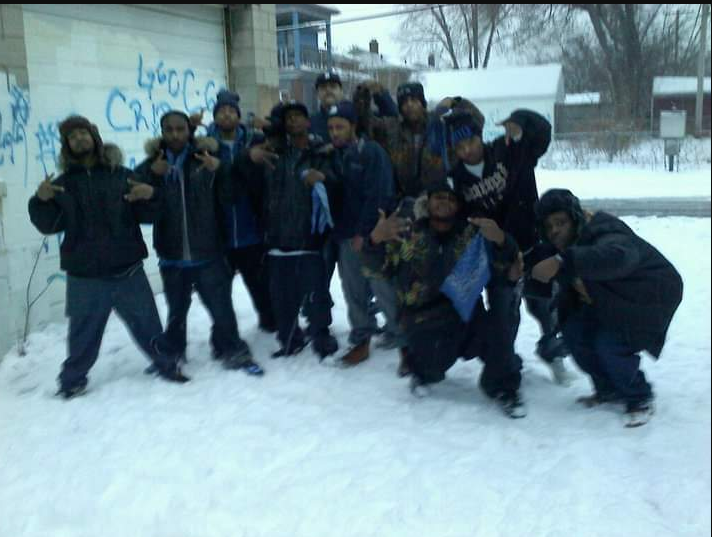
The 7 Mile Rollin’ 60s Crips (7M R$C) are documented as predominantly African American, and one of Detroit’s older and more historically recognizable Crip sets. Once far larger and highly visible, their numbers have decreased significantly following internal losses and extensive federal attention. A prolonged conflict with the Playboy Gangster Crips/TTG culminated in an ATF-led RICO case that removed much of the leadership and destabilized the set.
The gang maintains active conflicts with Eastside Rollin’ 80s Skyline Pirus and the 6 Mile Bounty Hunna Watts Bloods (6M BHB). Their relationship with the SchoolCraft Boyz (SCB) is unclear and varies by source. The set also has deep overlap with local GDs, and members participate in the 7654 network alongside 6M BHB—an unusual but documented alignment for the area.
Although this page focuses on the Westside 7 Mile Rollin’ 60s, the broader Detroit R60s identity includes smaller affiliated gangs such as PBF (Pusha/Push-It Boy Family), FOE-LIFE (Family Over Everything – Love Is Forever), and 7M R$C cliques clustered near Evergreen and Seven Mile.
For definitions of terminology related to activity, conduct, demographics, gang-related terms, identifiers, and classifications used on this page, refer to the site glossary.
For definitions of terminology related to activity, conduct, demographics, gang-related terms, identifiers, and classifications used on this page, refer to the site glossary.
*In No Particular Order*
- 7M R$C
- 7M R60s
- 7M Rollin Crips
- Cixty Crips
- 6X10
For definitions of terminology related to activity, conduct, demographics, gang-related terms, identifiers, and classifications used on this page, refer to the site glossary.
*In No Particular Order*
- Northwest Detroit – 48235 ZIP code
- Seven Mile Lodge neighborhood
- W. Seven Mile & Hubbell
- W. Seven Mile & Meyers
- Documented spillover into Ferndale and parts of Southfield
For definitions of terminology related to activity, conduct, demographics, gang-related terms, identifiers, and classifications used on this page, refer to the site glossary.
*In No Particular Order*
For definitions of terminology related to activity, conduct, demographics, gang-related terms, identifiers, and classifications used on this page, refer to the site glossary.
*In No Particular Order*
- Graffiti tags: “R$C,” “7M R60s,” “Cixty Crips,” “RSC”; Associated colors in graffiti reportedly include blue, black and occasionally red
- Blue bandanas (Royal Blue)
- Hand signs referencing 6, 0, C (“Crip/Crips”), and 7 (W. Seven Mile Road)
- Neighborhood-specific Rollin’ 60s markings
For definitions of terminology related to activity, conduct, demographics, gang-related terms, identifiers, and classifications used on this page, refer to the site glossary.
*In No Particular Order*
- Raketeering
- Narcotics distribution
- Armed robberies
- Murder
- Territorial graffiti
- Street-level disputes
- Reported disruptions of lawful or public meetings
- Auto theft
- Fraud
- Transit fare evasion
- Public intoxication
- Loitering
- Shootings
- Intimidation
For definitions of terminology related to activity, conduct, demographics, gang-related terms, identifiers, and classifications used on this page, refer to the site glossary.
No Particular Order*
- Blood-affiliated sets on Detroit’s Westside (notably 6M BHB)
- Crip factions not aligned with the Rollin Neighborhood (2X/Rollin) card
- Certain GD sets where territory overlaps
- Playboy Gangster Crips / TTG and other GC-aligned crews
For definitions of terminology related to activity, conduct, demographics, gang-related terms, identifiers, and classifications used on this page, refer to the site glossary.
According to federal filings and local reporting, the 7 Mile Rollin’ 60s formed around 2006 and grew to an estimated 150 members at their peak. Their long-running war with the 7 Mile Playboy Gangster Crips drew extensive federal attention, resulting in two major RICO prosecutions:
- 2016–2018: Twelve R60s leaders convicted under RICO.
- 2019: Sixteen PBGC/TTG members convicted in a parallel case.
Federal authorities described the R60s as a violent criminal street organization operating along Seven Mile Road between Evergreen and Tracey. Although federal pressure reduced their size and visibility, they remain one of the most established Crip presences on Detroit’s Westside and retain influence within the larger Detroit Rollin Neighborhood Crips (2X/Rollin) structure.
For definitions of terminology related to activity, conduct, demographics, gang-related terms, identifiers, and classifications used on this page, refer to the site glossary.
*In No Particular Order*
- 7M R$C (primary identity)
- PBF – Push-It Boy Family
- FOE-LIFE (noted in some community reporting)
Notes & Verification Status
Information is compiled from public records, community reports, and law enforcement sources.
Use of this page is for informational and historical purposes; it is not legal documentation.
Sources:
*Sources are listed in no particular order. Numerical placement does not indicate priority, authority, or primary-source status.*
- 1. DOJ Press Release 2018, Rollin’ 60 Crips Gang Leaders Sentenced for Racketeering Charges
- 2. DOJ Press Release 2019, 16 Members of a Violent Gang from Detroit’s Westside Have Been Convicted for Their Roles in a Racketeering Conspiracy
- 3. Click On Detroit Local 4 WDIV 2018, 2 leaders of Detroit’s Rollin 60s Crips street gang sentenced for racketeering
- 4. Fox 2 Detroit 2016, 12 gang members of the Rollin 60s Crips in Detroit arrested
- 5. Click On Detroit Local 4 WDIV 2019, Inside the takedown of the ‘Playboy Gangster Crips’
- 6. Click On Detroit Local 4 WDIV 2018, Feds bust ‘Playboy Gangster Crips” gang
- 7. Detroit Free Press 2017, Busted on Facebook? Feds say Playboy Gangster Crips crew sold drugs, AK-47 on social media
- 8. 2025 Detroit Crips Mini-documentary, Most Dangerous Crip Gangs in Detroit: The Real Story of Power, Bloodshed & Survival
- 9. 2025 Detroit Bloods Mini-documentary, Most Dangerous Blood Gangs in Detroit EXPOSED: 55 Seven Mile Bloods, 82 Headbanger Bloods & More!
- 10. Alamy Stock Photos 2015-2025, “Detroit Crips Graffiti,” 330+ photos with EXIF data and detailed titles/captions used for identification and location context
- 11. Gang Terminology, GangEnforcement.com
- 12. Street Gangs, GangEnforcement.com
- 13. National Gang Center (NGC), Michigan Gang-Related Legislation By State